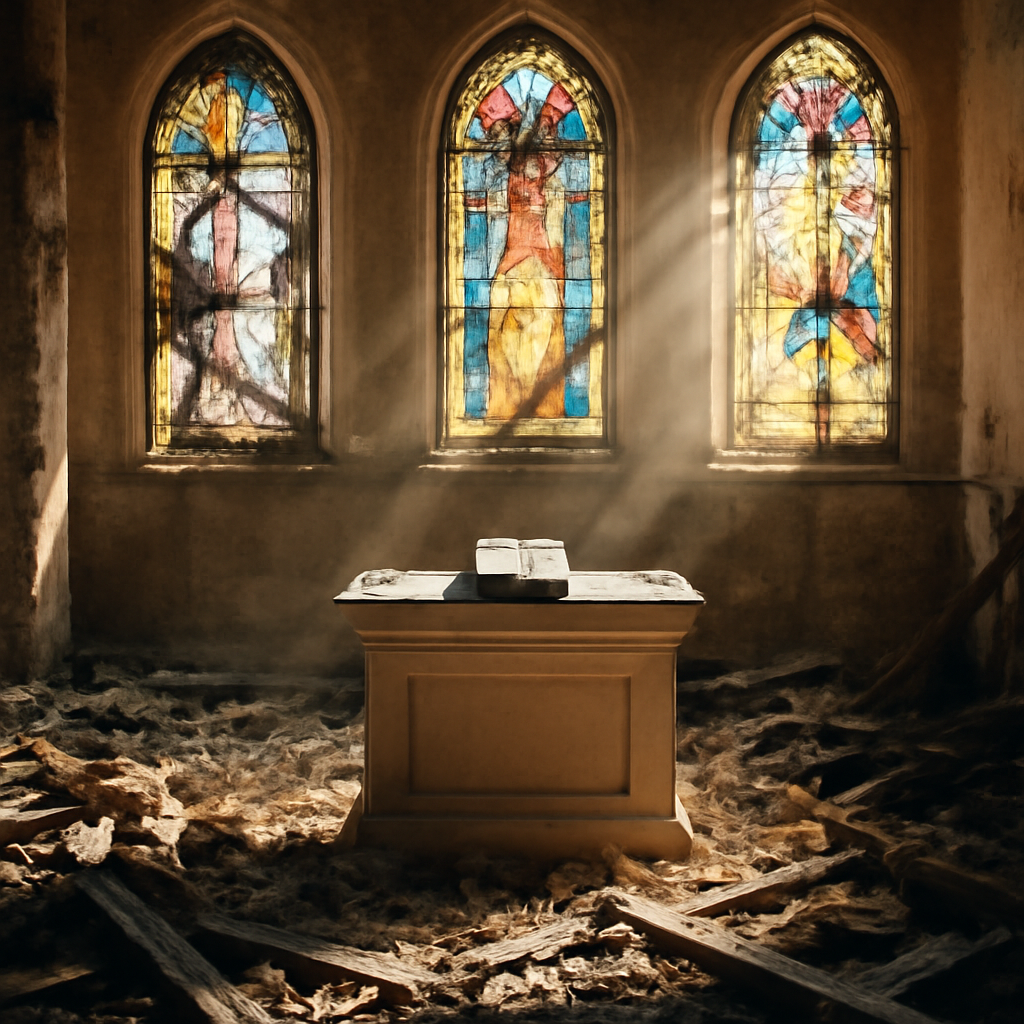
Why would a place of worship be targeted? The immediate cause is the ongoing conflict between Russia and Ukraine, a struggle fueled by political tensions and territorial disputes. But this act urges a deeper look, beyond the physical into the spiritual. What makes the sanctity of a church so threatening to forces of darkness?
The psalmist sang, "I was glad when they said unto me, Let us go into the house of the Lord." (Psalm 122:1) Within those walls, believers find joy and peace, united in faith, seeking guidance from the Almighty. The destruction of such a place is a reminder of the unseen spiritual warfare—a battle not against flesh and blood, but against principalities and powers that threaten the sanctity of worship.
Reflecting on this tragedy, it is essential to hold fast to a deeper truth. The physical church may fall, but the true Church—the body of believers—stands unshaken. Persecution is not new; history is filled with believers who stood firm as the world crumbled around them. Their faith, unyielding, is a testament to the enduring spirit of the Church.
Consider Nehemiah, who rebuilt Jerusalem's walls amidst great opposition. His task was more than physical reconstruction; it was a spiritual renewal. "Rebuilding Hope in St. Louis" echoes this theme, reminding us that amidst destruction, hope can be restored, and faith renewed.
In the heart of this conflict, remember Jesus' words: "Blessed are the peacemakers: for they shall be called the children of God." (Matthew 5:9) Peace isn't just the absence of conflict; it's the presence of justice and righteousness. It's a call to action, to stand firm in faith, to be instruments of God's peace in a world desperate for healing.
Picture a small congregation in Donetsk Oblast, gathering amidst the rubble, their voices lifted in song, their hearts steadfast in prayer. This is faith's power—a force no earthly power can extinguish. The gospel offers something harder and better than comfort—it offers hope in the midst of despair, light in the darkest night, and a reaffirmation of the sanctity of worship.