In Cuba, the government has cracked down on religious gatherings, viewing them as a threat to their control. In Nicaragua, the same pattern emerges, where hostility towards religious freedom underscores a broader anti-American sentiment. These nations, entrenched in their political ideologies, see the church as an adversary—a beacon of hope and truth that challenges their oppressive rule.
The persecution of believers in these lands is not new, but it has taken on a renewed vigor, driven by regimes that fear the transformative power of the Gospel. As these governments tighten their grip, the reason becomes clear: faith stands as a bulwark against tyranny, offering a vision of freedom that defies earthly chains. This ongoing religious persecution serves as a stark reminder of the challenges faced by those who choose to follow Christ.
Scripture foretells such trials. "Yea, and all that will live godly in Christ Jesus shall suffer persecution." (2 Timothy 3:12) The words of Paul echo through the ages, reminding us that the path of righteousness is often marked by hardship. Yet, these trials are not without purpose. They refine and strengthen, drawing believers closer to the heart of God.
In the everyday struggles of life—traffic jams, unpaid bills, the fatigue of a long day—there is a quiet parallel to the endurance required of our brothers and sisters facing persecution. Their trials, though far more severe, remind us of the resilience that faith demands. It is a resilience that thrives not in the absence of adversity, but in its very presence.
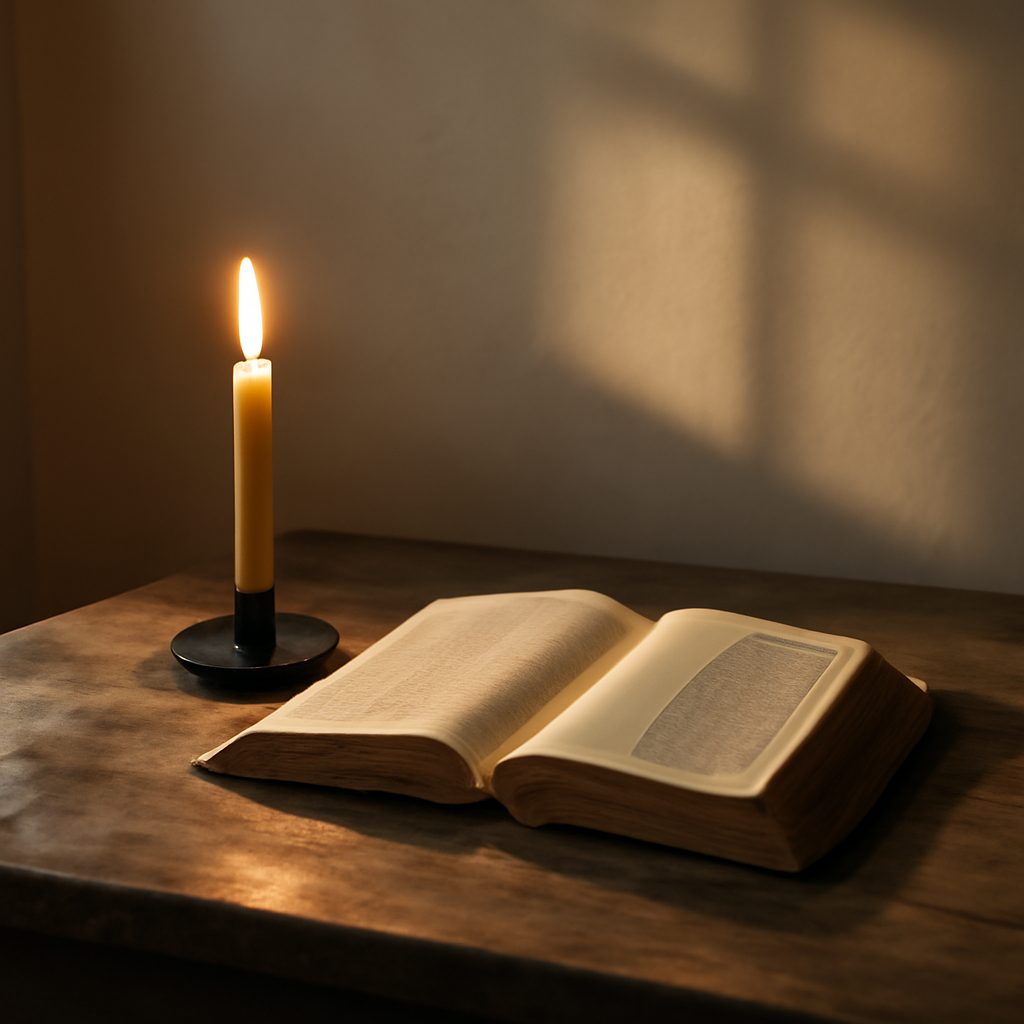
The image of a flickering flame serves as a poignant metaphor. In the darkness, a candle's light is most visible. So too, the faith of persecuted believers shines brightest amidst the shadows of oppression. It is a faith that defies logic, a faith that stands unshaken in the face of overwhelming odds.
There is an irony here, understated yet profound. The regimes that seek to quench the spirit of faith unwittingly fan its flames. The more they oppress, the more they highlight the truth that the Gospel proclaims—a truth that cannot be silenced by force or fear.
As we reflect on these events, we are reminded of the tension between the world's hostility and the peace that Christ offers. It is a tension that may never be fully resolved this side of eternity, yet it calls us to stand firm. To pray for those who suffer, and to hold fast to the hope that is within us, especially in the face of such religious persecution.
In the end, it is the image of that solitary Bible, open and illuminated by a humble flame, that lingers. It speaks of a faith that endures, a faith that will not be extinguished. And it calls us, each in our own way, to bear witness to the light that shines in the darkness.