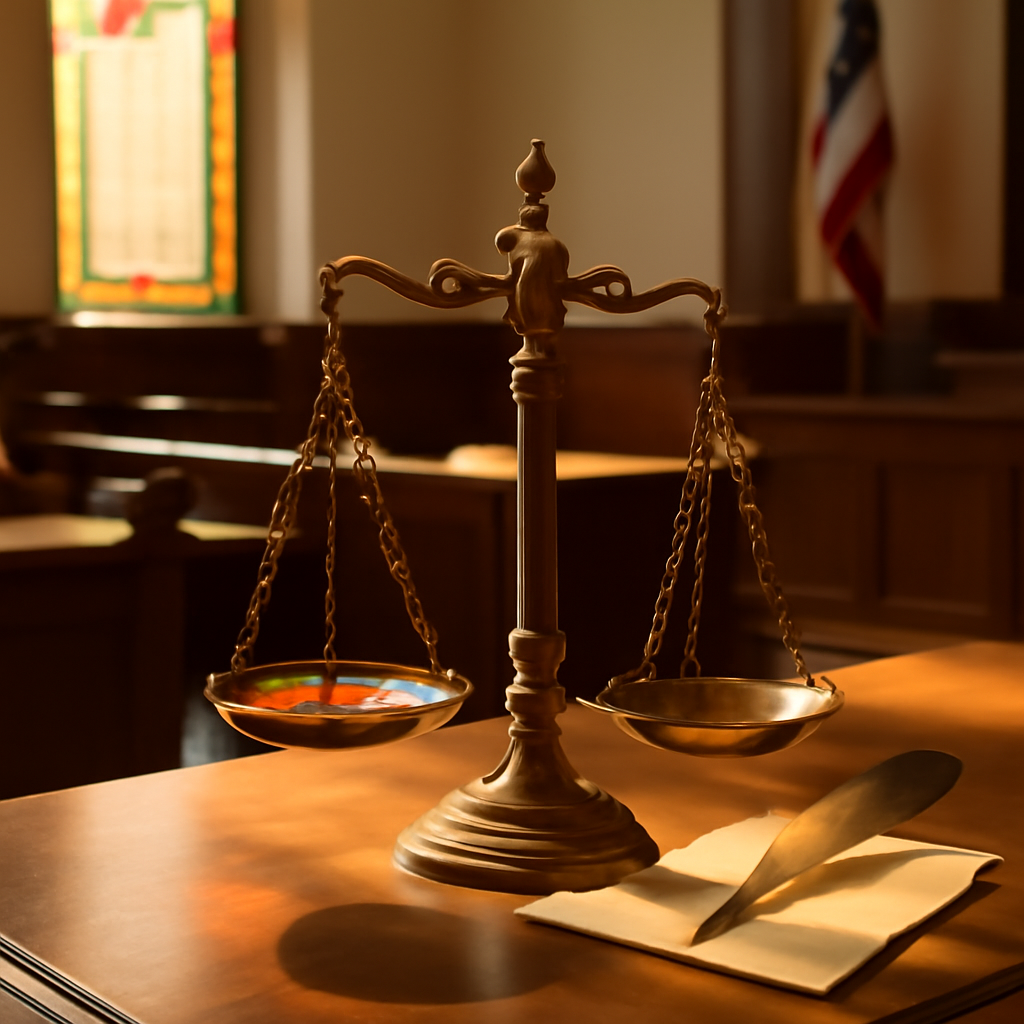
The jury discrimination case reached the Supreme Court after years of legal battles, raising questions about the integrity of the judicial process. It was a moment when the scales of justice seemed to tip toward truth, shedding light on the darker corners of human prejudice. The court's ruling was not just a legal victory but a profound reminder of the enduring call for justice in our society.
"It is joy to the just to do judgment: but destruction shall be to the workers of iniquity." (Proverbs 21:15) These ancient words echo through the corridors of time, reminding us that true justice is not merely about legal correctness but about aligning our hearts with God's righteousness. In this Mississippi courtroom, the Supreme Court's decision in the jury discrimination case was a reflection of this divine principle, a step toward correcting an injustice that had long been overlooked.
In a world that often seems to favor the powerful and the privileged, the Bible calls us to a higher standard. It challenges us to examine our own hearts for hidden biases and to strive for a justice that mirrors God's own. The Supreme Court's intervention in this jury discrimination case is a reminder that while human systems are flawed, there is a divine standard that remains unchanging and true.
As we consider the implications of this ruling, we are invited to reflect on our own roles in the pursuit of justice. Are we, like the Pharisees of old, quick to judge others while ignoring our own failings? Or do we seek to embody the mercy and fairness that God extends to each of us? The Supreme Court's decision is a call to action, urging us to pray for wisdom and courage as we navigate the complexities of justice in our own lives.
Let us turn our hearts to prayer, asking for the clarity to see beyond our prejudices and the strength to champion justice for all. In doing so, we align ourselves with the heart of God, who is both just and merciful, and whose ways are higher than our own.