Ozzy Osbourne: Misunderstood
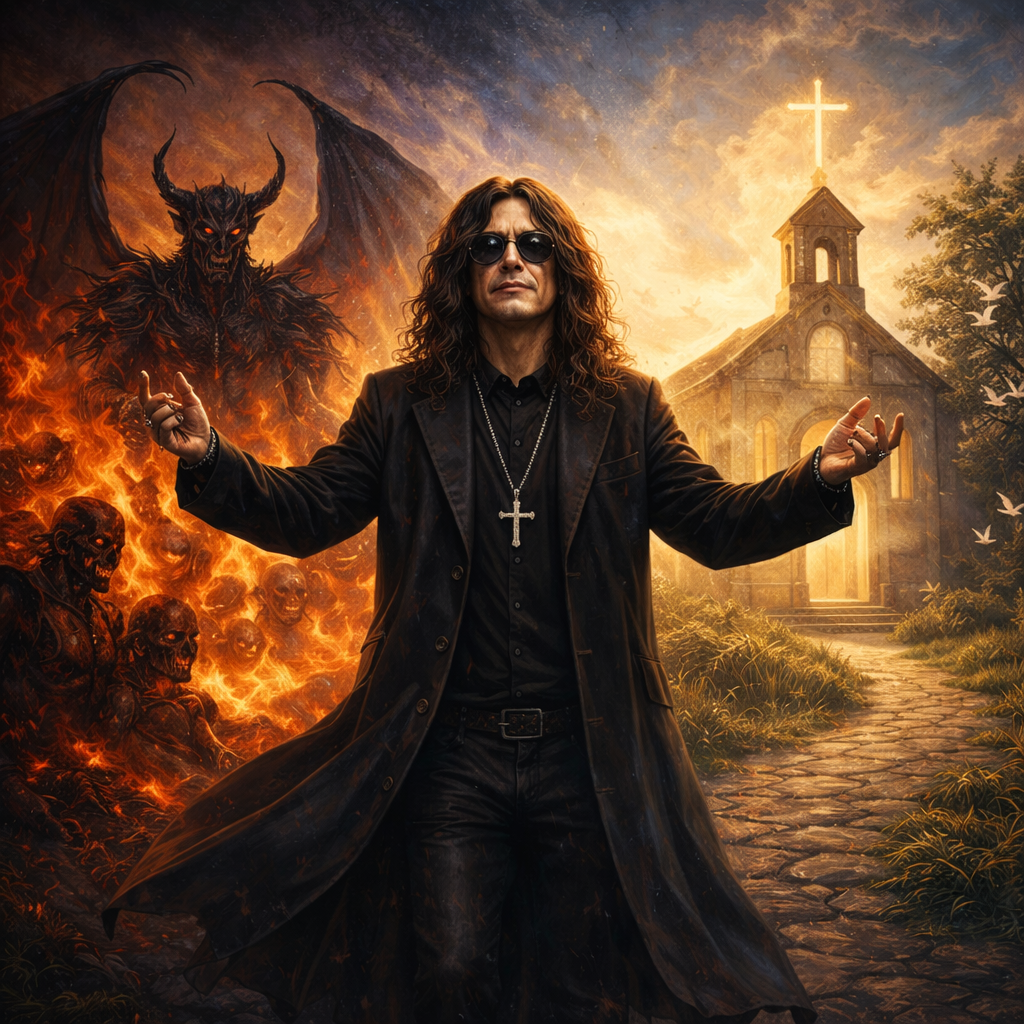
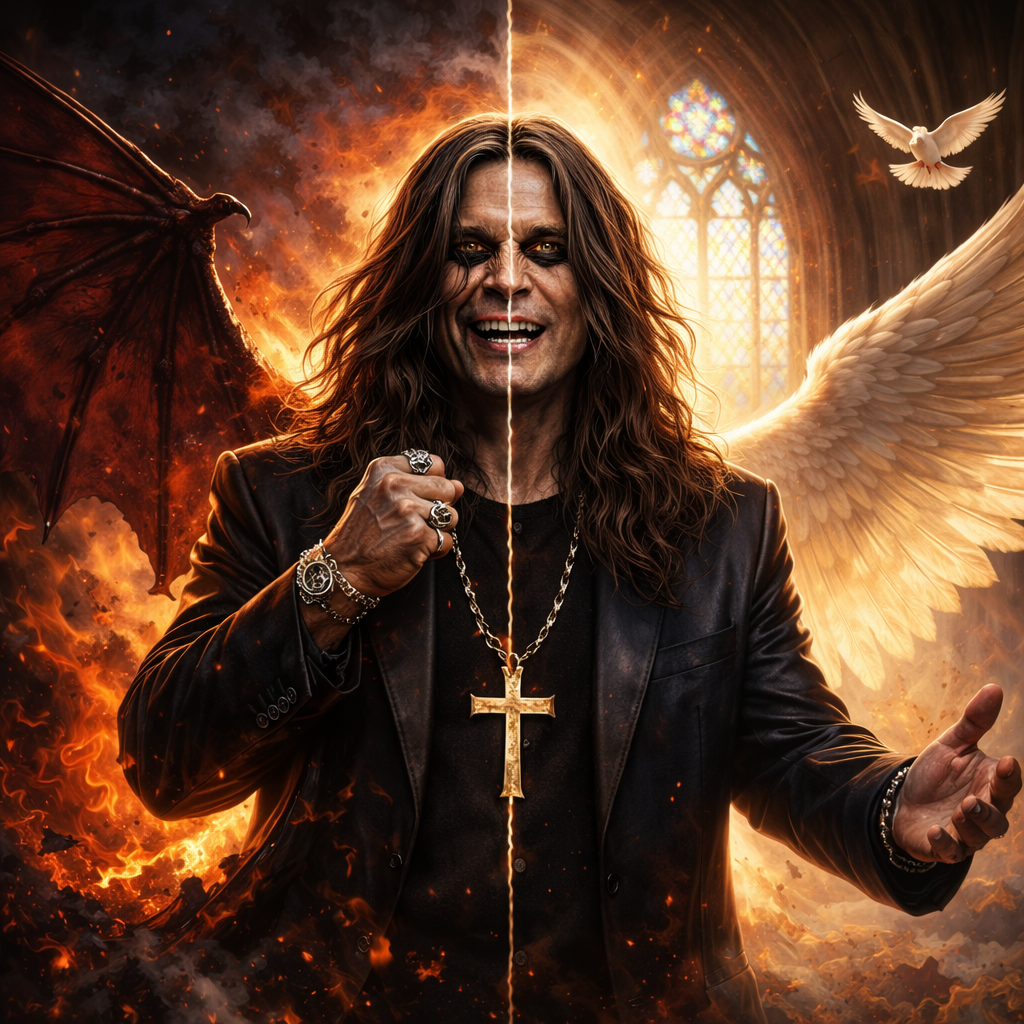
For decades, the name Ozzy Osbourne has conjured images of bats, darkness, and controversy, a figure seemingly antithetical to Christian values. He has been reviled by some, condemned by others, and often held up as a prime example of secular rebellion. Yet, a deeper look into the life and statements of the "Prince of Darkness" reveals a more nuanced picture, one that prompts us to consider whether Ozzy Osbourne is truly beyond the reach of God's grace, or if, in his own unconventional way, he has remained safely in the fold, perhaps simply misunderstood by those who judge solely by outward appearance.
As followers of Christ, we are called to discern with wisdom and to extend grace, remembering that "man looks at the outward appearance, but the LORD looks at the heart" (1 Samuel 16:7). It is in this spirit that we approach the complex spiritual journey of Ozzy Osbourne.
A Caution Against Judging by Appearances: The Test of Imago Dei
The story of Ozzy Osbourne serves as a powerful reminder of a spiritual trap many Christians fall into: judging a person's heart and faith based solely on their outward image or public persona. While we are called to be discerning about the influences we allow in our lives, this discernment must be applied to behaviors and teachings, not to a person's aesthetic or theatrical choices. The Bible is clear on this point, from Jesus's parables to the Apostle Paul's letters. Jesus warned against hypocrisy and the Pharisees who focused on outward piety while neglecting inner righteousness (Matthew 23:27-28).
The true test of our faith is in our ability to see the imago Dei—the image of God—in every person. It is easy to see this divine spark in those we love or admire, but it is a much greater challenge, and a core Christian duty, to recognize it in those whose outward appearance or life choices distract us. This includes not only the homeless and the marginalized, but also those whose past actions or public images are difficult for us to reconcile with our faith. The spiritual pitfall here is the temptation to create a hierarchy of human worth, which is contrary to the radical, all-encompassing love demonstrated by Christ. He saw the inherent dignity in everyone, from the leper to the tax collector, reminding us that grace is not earned but freely given to all those who claim it, bleed willingly for it, and follow with obedience the Word of God.
Anglican Roots and Enduring Belief
Perhaps one of the most surprising revelations for many is Osbourne's consistent affirmation of his Christian faith. Despite his wild public persona, Ozzy was christened in the Church of England, attended Sunday school, and was raised within the Anglican tradition, even briefly considering the priesthood in his youth [Word on Fire, "Ozzy Osbourne's Complex Life of Faith"]. This foundational upbringing, often overlooked amidst the sensationalism, provides crucial context for understanding his later statements.
In a 1992 New York Times interview, Osbourne declared himself "a practicing member of the Church of England" and stated he prayed before every concert [God Reports, "Ozzy Osbourne's complex spiritual journey"; Premier Christianity, "Ozzy Osbourne (1948-2025): Prince of darkness or man of faith?"]. This was not an isolated comment. Throughout his career, even amidst accusations of Satanism, he consistently denied any such association, unequivocally stating, "I'm a Christian. I believe in God." In a 1986 interview with SPIN magazine (cited in The Guardian and other sources), he reiterated, “I’m a Christian. I was christened as a Christian. I used to go to Sunday school” [Word on Fire, "Ozzy Osbourne's Complex Life of Faith"; Crosswalk.com, "Evangelist Reflects on Ozzy Osbourne's Surprising Reaction to the Gospel"]. These are not the words of a man who has completely abandoned his faith.
The "Prince of Darkness" Persona vs. Personal Conviction
The stark contrast between Osbourne's public image and his personal beliefs is where much of the misunderstanding arises. His "Prince of Darkness" moniker, the occult imagery in Black Sabbath's lyrics, and his theatrical stage antics led many to believe he was a purveyor of evil. However, Osbourne consistently maintained that these were metaphorical and theatrical, not reflective of his personal beliefs or an endorsement of Satanism [Word on Fire, "Ozzy Osbourne's Complex Life of Faith"]. Songs like "Mr. Crowley," referencing occult figures, were, according to him, not an affirmation of the occult but rather a form of artistic expression, a "food for thought" rather than a religious endorsement. He explicitly stated, "I am not a devil-worshipper" [Christian Daily, "Ozzy Osbourne dies at 76; Rock legend's life marked by music, turmoil and a complex faith"].
This distinction is crucial. As Christians, we are called to be discerning of influences that lead people away from God. However, we must also be careful not to conflate artistic expression, even if provocative, with genuine spiritual allegiance. The Apostle Paul reminds us to "test everything; hold fast what is good" (1 Thessalonians 5:21). In Ozzy's case, while the imagery was certainly unsettling to many, his consistent verbal denials of Satanism and affirmations of belief in God suggest a disconnect between the performer and the person. His songs, particularly some from Black Sabbath like "After Forever," actually contained lyrics that affirmed belief in God and warned against denying Christ [God Reports, "Ozzy Osbourne's complex spiritual journey"; Premier Christianity, "Ozzy Osbourne (1948-2025): Prince of darkness or man of faith?"].
Christian Circles and Late-Life Reflections
The reception of Ozzy Osbourne within Christian circles has, understandably, been mixed. Discussions on platforms like Reddit's r/Christianity reveal a spectrum of views. Some acknowledge his self-identification as a Christian, while others point to his non-traditional approach to faith, particularly his eschewing of organized religion and consistent church attendance [Reddit, "My thoughts on Ozzy : r/Christianity"]. One user noted, "He said he considered himself a Christian but did not attend church" and did not subscribe to traditional Christian beliefs. Yet, others highlighted his extensive charity work, including his final concert with Black Sabbath raising $190 million for Parkinson's research and children's hospitals [Good News Network, "Ozzy Osbourne's Final Concert with Black Sabbath Raised $190 Million for Charity"], and the possibility that he remained a practicing Anglican despite public rebellion.
Perhaps most compelling are Osbourne's late-life reflections. Even as he battled various health issues, including Parkinson's disease, he continued to affirm his belief in God [Word on Fire, "Ozzy Osbourne's Complex Life of Faith"]. An evangelist even shared an easy-to-read Bible with him, which Ozzy reportedly cherished and shared with guests, a testament to his continued spiritual curiosity and openness [Crosswalk.com, "Evangelist Reflects on Ozzy Osbourne's Surprising Reaction to the Gospel"]. This persistent affirmation, even as he faced his own mortality, lends significant weight to the sincerity of his long-held belief.
Grace, Forgiveness, and Unconventional Faith
The journey of Ozzy Osbourne presents a profound opportunity for reflection on the nature of faith, grace, and forgiveness. While his life has been marked by personal struggles and public antics that certainly do not align with traditional Christian conduct, his unwavering declaration of belief in God and identification as a Christian cannot be dismissed.
We are reminded that God's grace is boundless and extends to all who genuinely seek Him, regardless of their past or public image. The parable of the prodigal son (Luke 15:11-32) teaches us about a father's unconditional love and readiness to welcome back a wayward child. While Ozzy Osbourne's path has been unconventional, his repeated assertions of faith suggest a heart that, despite its detours, has never fully strayed from its foundational belief in God. As one Reddit user aptly put it, "He's admitted many times that he's a christian. He prays, admits he prays, also admits he has a problem with organized 'religion.' Jesus seemed to have a problem with organized religion too. He processed faith. He professed to praying. He was found praying in church many times. I don't think we should judge too harshly" [Reddit, "My thoughts on Ozzy : r/TrueChristian"].
In sum, Ozzy Osbourne stands at the crossroads of faith and rebellion, embracing spirituality on his own terms. While his public persona often sparked controversy and alarm within Christian communities, his consistent and lifelong affirmation of belief in God, rooted in his Anglican upbringing, suggests a man who, perhaps, was more misunderstood than truly lost. As Christians, we are called to look beyond the surface, to extend grace, and to trust in the transformative power of God's love, even in the most unexpected of lives.
Citations:
Christian Daily. "Ozzy Osbourne dies at 76; Rock legend's life marked by music, turmoil and a complex faith." July 22, 2025. Crosswalk.com. "Evangelist Reflects on Ozzy Osbourne's Surprising Reaction to the Gospel." July 25, 2025. God Reports. "Ozzy Osbourne's complex spiritual journey." July 22, 2025. Good News Network. "Ozzy Osbourne's Final Concert with Black Sabbath Raised $190 Million for Charity." July 18, 2025. Premier Christianity. "Ozzy Osbourne (1948-2025): Prince of darkness or man of faith? | Opinion." July 24, 2025. Reddit. r/Christianity. "My thoughts on Ozzy." July 22, 2025. Reddit. r/TrueChristian. "My thoughts on Ozzy." July 22, 2025. Wikipedia. "Ozzy Osbourne." https://en.wikipedia.org/wiki/Ozzy_Osbourne (Accessed July 30, 2025). Word on Fire. "Ozzy Osbourne's Complex Life of Faith." July 25, 2025.