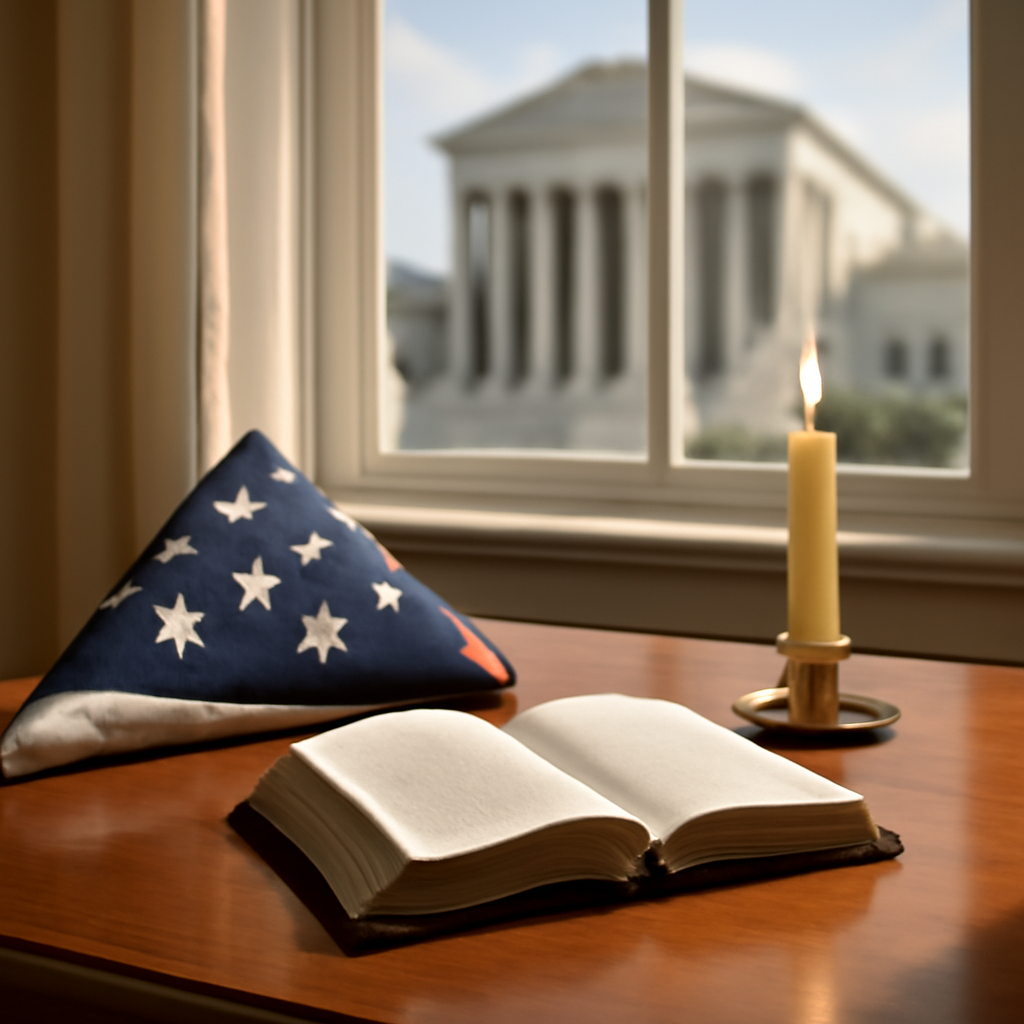
The Supreme Court, seated in Washington D.C., is no stranger to such matters. This institution, with its storied history of interpreting the Constitution, now faces the task of deciding where the line between religious freedom and governmental authority should be drawn. As citizens, one may ask: How did we arrive at this juncture, and what does it mean for the nation?
The case at hand arises from a conflict that has been brewing for years, a conflict rooted in the ongoing debate over religious expressions in public spaces. The question is whether certain expressions of faith infringe upon the rights of others or whether they are protected under the First Amendment. This is not merely a legal issue; it is a spiritual one, as it challenges us to consider the role of faith in public life and the church state balance.
"Render therefore unto Caesar the things which are Caesar's; and unto God the things that are God's." (Matthew 22:21)
Jesus' words in Matthew 22:21 remind us of the dual responsibilities we hold as both citizens and believers. We are called to honor earthly authorities while remaining true to our heavenly commitments. This balance is not always easy to achieve, but it is essential for a society that values both freedom and faith.
As we ponder the role of the Supreme Court in this matter, let us turn our attention to the wisdom found in the Word of God. The Bible offers guidance, reminding us of the importance of discernment, respect, and the pursuit of justice. The Apostle Paul, in his letter to the Romans, speaks of the authority of the state as ordained by God, yet he also calls us to live in peace with all men, as much as it depends on us.
Discernment in applying God's Word to contemporary issues. Respect for the laws of the land, while advocating for righteousness. Pursuit of justice, tempered with mercy and love.
These principles guide us as we navigate the complexities of modern governance and religious freedom. They call us to engage thoughtfully and prayerfully with the issues at hand, seeking not only legal victories but also the flourishing of the human soul, all while striving to maintain a healthy church state balance.
You may be reading this with a tired heart, weary from the noise of the world and the weight of uncertainty. Take comfort in knowing that the challenges we face today are not new. The early church, too, wrestled with questions of allegiance and identity. Yet through it all, they remained steadfast, grounded in the truth of the Gospel.
As we await the decision of the Supreme Court, let us hold fast to our faith, trusting that God's purposes will prevail. In the end, it is not the edicts of man that will define us, but our obedience to the One who calls us by name. May we seek His wisdom and walk in His ways, knowing that He is the ultimate judge of all things.