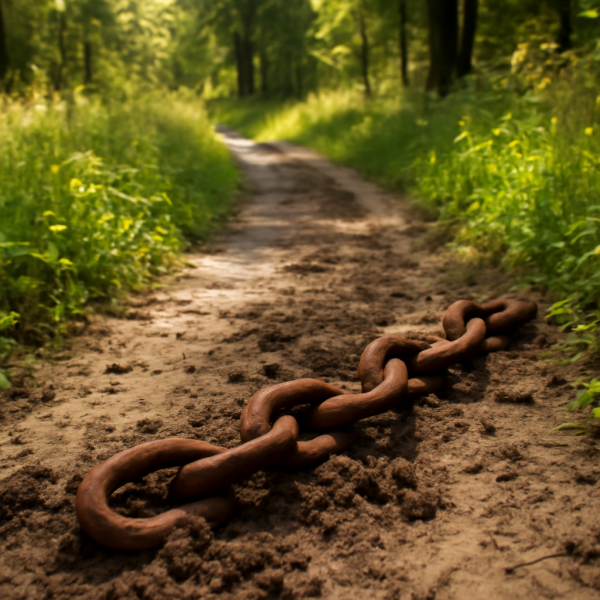
As about 20 participants marched silently along this muddy trail, the haunting strains of the African American spiritual “Wade in the Water” echoed alongside them. Renee Munford, a 65-year-old participant, felt the presence of her ancestors and was moved to tears, imagining the fear and confusion they must have felt. This pilgrimage was not just a walk through history but a confrontation with the past, a reckoning with the role of their city and denomination in the sin of slavery.
The pilgrimage, titled “Walking With the Enslaved: The Church’s Role in Slavery Pilgrimage,” was a collaborative effort between St. Paul’s Episcopal Church and St. Philip’s Episcopal Church. St. Paul’s, once attended by Confederate leaders, and St. Philip’s, founded by enslaved and freed Richmonders, came together to create an experience centered on stories, prayer, and spirituals. Their aim was transformation, both personal and communal, as they grappled with the legacy of Richmond’s past as a major slave-trading center, including the Richmond slave trail.
As the nation approaches the 250th anniversary of the Declaration of Independence and Juneteenth, this pilgrimage is a reminder of the work that remains. The Episcopal Church, under the leadership of figures like Bishop Michael Curry, has been committed to racial reconciliation since 2016. Yet, this journey is not just about the past—it is about seeking a future where justice and mercy walk hand in hand.
"If my people, which are called by my name, shall humble themselves, and pray, and seek my face, and turn from their wicked ways; then will I hear from heaven, and will forgive their sin, and will heal their land." (2 Chronicles 7:14)
Our nation’s history is a tapestry woven with both triumph and transgression. The Richmond slave trail is a stark reminder of the latter. Yet, in this somber journey, there is hope. The churches’ collaboration reflects a broader effort to confront the city’s slave-trading past and seek renewal through faith.
Imagine the dust of the trail underfoot, the murmur of the river, the heavy silence of shared reflection. This pilgrimage is more than an acknowledgment of history; it is a call to action, a plea for healing. As individuals walk alongside those who came before them, there is an invitation to turn, to seek, and to be transformed by the grace that waits on the other side of repentance.
Let us carry with us the words of 2 Chronicles 7:14 this week, a reminder that our journey toward healing begins with humility and prayer. May individuals, as well as the nation, find the courage to walk the path of reconciliation, trusting that in doing so, renewal and peace will be found.