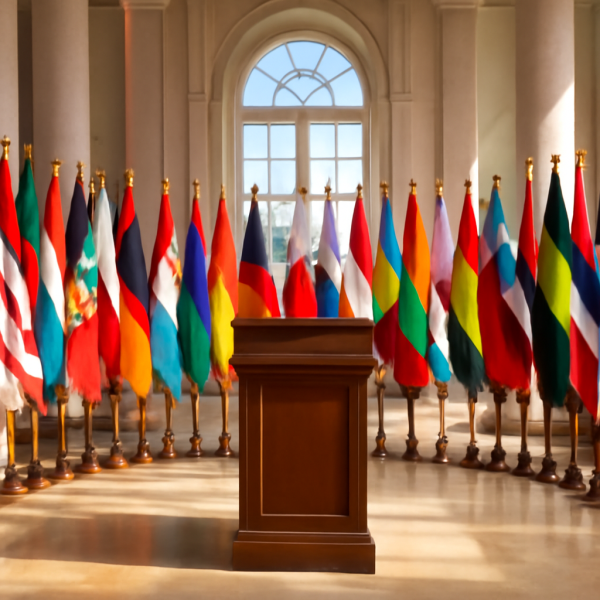
President Donald Trump did not appear in person but sent a letter to the assembled delegates, delivered by Vince Haley, director of the White House Domestic Policy Council. "As the Secretariat, the United States will work closely with our allies and partners to advance the Declaration's vital mission," Trump wrote. He added, "My Administration will always stand for the dignity of human life, the health and well-being of women, the strength of the family, and the right to defend these values and traditions."
The coalition has grown considerably since the Declaration's founding in 2020, when 32 nations signed the original document. President Joe Biden withdrew the United States from the pact in 2021 and urged other nations to follow, and momentum slowed for a season. Rejoining the Declaration was among President Trump's first actions after returning to office in 2025. Eleven additional nations have signed on since, bringing the roll from 32 to the 43 that stood together on Capitol Hill this week.
The Declaration commits signatory nations to four stated aims: to secure meaningful health and development gains for women, to protect life at every stage, to defend the family as the fundamental unit of society, and to work together across the United Nations system to advance those values. The signatories span the globe, from Hungary and Georgia to Kenya, Uganda, Paraguay, Guatemala, and Saudi Arabia, a coalition as varied in culture as it is united in this one conviction.
What No Treaty Can Give
Forty-three flags on a page make a fine photograph. They do not, by themselves, save one child. A signature is not a heartbeat. A declaration is not a soul. What happened on Capitol Hill this week is worth noting, my friend, and worth being glad about — nations agreeing, on paper, that a life in the womb is a life worth protecting is no small thing in a world that has grown numb to the question. But paper holds only what the hand behind it is willing to defend, and law only restrains what grace alone can truly change.
The reason this fight over the unborn never goes away, in any nation, under any flag, is that it was never merely a policy question to begin with. It is a question about who made us and why. Scripture does not treat the child in the womb as a matter of debate. It treats that child as known.
"Before I formed thee in the belly I knew thee; and before thou camest forth out of the womb I sanctified thee, and I ordained thee a prophet unto the nations." (Jeremiah 1:5)
That word was spoken to a prophet, but it tells the truth about every child ever knit together in secret. The psalmist said the same thing from the other direction, praising the God who did the knitting: "I will praise thee; for I am fearfully and wonderfully made: marvellous are thy works" (Psalm 139:14). No government issued that child's worth. No treaty can revoke it. It was settled before the first breath, by the hand that formed him.
So take heart in what happened this week, but do not mistake it for the whole battle. Laws can restrain evil; they cannot regenerate a heart. The nations that signed this declaration still need what only the gospel supplies — not merely a policy that protects life, but a Savior who gave His own. The same God who knew you in the womb sent His Son to the cross so that the life He formed in you might be saved, not just preserved. That is the declaration that matters most, and it needs no secretariat, no signature, and no anniversary. It only needs a heart willing to receive it.