The government's pretext rests on Law on Associations No. 12-06, passed in 2012, which requires every religious group to hold a state-issued registration receipt before its congregations can meet legally. The EPA reapplied for that status in August 2014 and again in July 2015. Algerian authorities never issued the renewal, and enforcement crews spent 2017 through 2019 padlocking one congregation after another. The ECLJ's report calls the arrangement "a restrictive legal and administrative system incompatible with international standards on freedom of religion."
The cost to EPA leadership has been steep. Vice-President Youcef Ourahmane was sentenced in November 2023 to a year in prison for organizing a spiritual retreat. Hamid Soudani, 45, spent from January 2021 to July 2023 imprisoned over a Facebook post. Slimane Bouhafs was tortured and held from September 2021 to September 2024. Algeria now sits 20th on Open Doors' 2026 World Watch List of nations where following Christ costs the most.
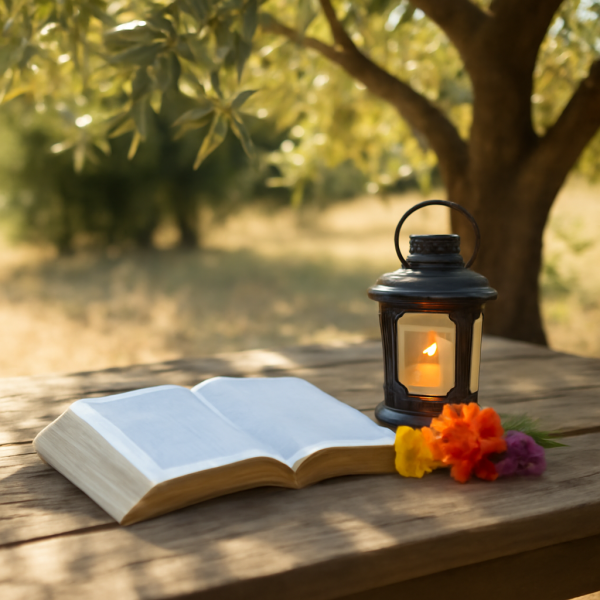
Two independent congregations outside the EPA network have also gone dark: a North Africa Mission church in Ouadhia, founded in 1956 with more than 200 members, and a similarly sized fellowship in nearby Ouacif, both in the Kabylia region long known as a center of Algerian Christian growth. EPA leaders say they continue petitioning the Ministry of the Interior for the paperwork that would let them reopen. Until then, believers meet where they can — in living rooms, in garages, under olive trees.
What a Church Is Made Of
Take the roof away from a congregation, take the pews and the steeple and the sign out front, and you find out fast what that church was actually made of. Algeria's believers did not fold when the doors were welded shut. They moved to the kitchen table and the orchard row, and by every honest account, they are still singing.
That should shame the comfortable. A great many folks in this country have never once wondered whether Sunday morning would cost them anything — no soldier at the door, no informant in the pew, no judge waiting to hand down a year for the crime of a prayer retreat. Freedom to gather has been so cheap here for so long that a man can forget it was ever bought with blood, and that somewhere tonight another man is paying that same price under an olive tree.
The New Testament church was born on the run. Believers met in upper rooms with the shutters closed, in catacombs, in the homes of strangers who risked everything to open a door. The building was never the point. The gathering was.
"For where two or three are gathered together in my name, there am I in the midst of them." (Matthew 18:20)
Read that promise slowly, my friend. It was not spoken over a cathedral. It was not spoken over a sanctuary with stained glass and cushioned seats. It was spoken as a plain fact for two or three souls in whatever room, field, or grove they could find. Algeria's sealed buildings cannot seal that promise. No government receipt was ever required for it.
Scripture also warns against the opposite danger — the slow drift of believers who have every freedom and use none of it:
"Not forsaking the assembling of ourselves together, as the manner of some is; but exhorting one another." (Hebrews 10:25)
A Christian in Kabylia risks prison to sit under an olive tree with two or three others and open the Book. A Christian in an American suburb, with a church on every corner and no soldier watching, sometimes cannot be bothered to get out of bed. Let that comparison do its work on the conscience.
The gospel was never a government program, and it does not depend on a registration stamp from any ministry. It runs on the same power that turned a tomb into an empty room two thousand years ago, and no committee anywhere has ever found a way to seal that up for good. Whatever it costs to gather in Algeria, or in Lahore, or in any hard corner of this world, the message being carried into those hidden rooms is the same one on offer to every reader here: that Christ died for sinners, rose the third day, and is willing this very hour to meet the soul who calls on Him — building or no building at all.