The council says only 11 formal complaints, called First Information Reports, were registered with police out of those 26 cases. Church leaders say that gap is a large part of their alarm. A crime that is never written down is a crime that is never answered.
The latest incidents came within 24 hours of each other. Believers say house-church gatherings were attacked in Barrackpore and in Khejuri, two separate parts of the state. In early September, the council says, a mob vandalized a Presbyterian house church in one district, and a pastor leading a prayer service in another was taken away by a crowd. The council also points to a church under construction at Sonarpur that was vandalized in the summer. The council wants impartial investigations, protection for congregations and families, and the withdrawal of criminal cases it says have been filed against pastors.
Those are the claims of the church leaders. Police have not confirmed the council's full tally, and the council itself says it is still pressing for investigations. Its leaders have asked for talks with the chief minister, and they have told the public they intend to continue peaceful rallies. Nobody in the council is calling for revenge. They are calling for the law to be applied to everyone alike.
Why a living room matters
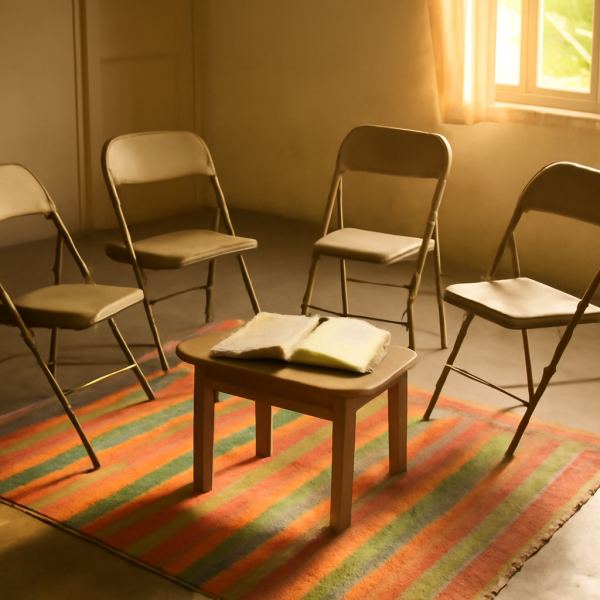
Consider what a house church is. It is not a cathedral with a spire and a stone wall. It is a front room, a borrowed courtyard, a few dozen folding chairs. The people who meet there are often the poorest in their village. They sing softly, and they read from a Bible that has been passed hand to hand. That is exactly why these meetings are easy to attack, and exactly why they matter so much.
The Lord Jesus knew His people would often be small in number and short on protection. He did not promise them buildings. He promised something better.
"For where two or three are gathered together in my name, there am I in the midst of them." (Matthew 18:20)
Read that again slowly. Two or three. No permit, no steeple, no crowd to guard the door. Where a handful of the redeemed bow their heads in His name, the King of heaven is in the room. A broken window can be mended. A scattered prayer meeting can be gathered again. But no mob has ever found a way to throw Christ out of a house where He has been invited in.
The apostle Paul told his young friend Timothy plainly what to expect: "Yea, and all that will live godly in Christ Jesus shall suffer persecution." (2 Timothy 3:12) The Bible never hid this from us. Still, to say that suffering is promised is not to say that it should be ignored. Those who live in safety are told to remember those who do not. A free people have a duty to speak when a sister in Barrackpore cannot.
What free nations owe the quiet believer
Religious liberty is not a gift from a government. It is a right that comes from God, and any government worth its name exists to protect it. That is the conviction on which this country was founded, and it is why American Christians watch the plight of believers abroad with more than idle curiosity. When a man is beaten for praying, the principle at stake is the same whether it happens in a village in Bengal or a town in Ohio.
The officials of West Bengal hold their authority from God, as every ruler does, and they will answer for how they use it. The first duty of that office is to protect the quiet and the peaceable. A pastor leading a prayer service is breaking no law. A widow who opens her home for Scripture reading is a danger to no one. They should be able to count on the police as surely as their neighbors do.
And to you, my friend, who may be tempted to think the gospel is a comfortable thing: look at what believers are willing to carry for it. Those families in Bengal keep gathering because they have found something worth more than ease. They have met the Savior who died for sinners and rose again, and no crowd with sticks can argue them out of that. If they can hold the line in a rented room, surely the rest of us can stand firm in a warm and well-lit sanctuary.
The gospel has always grown in small rooms. It began in an upper room in Jerusalem, and it will outlast every angry crowd that tries to silence it.