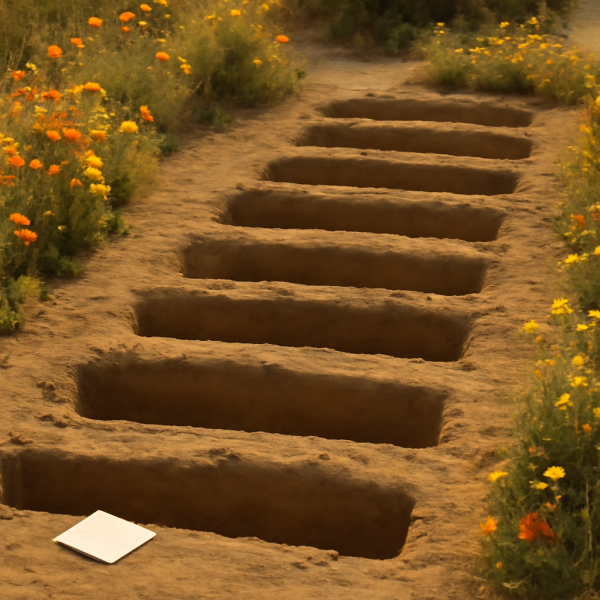
Dachomo, a regional leader with the Church of Christ in Nations (COCIN), was not present when the shooting began. For years he has buried the Christian dead of Plateau State's Middle Belt, a region worn down by repeated raids blamed on armed Fulani herdsmen. By the close of 2025 he had presided over more than seventy mass burials. A photograph of him leading the funeral of roughly twenty believers was shared earlier this year by President Donald Trump, drawing wide attention to the killings in the region.
Days after the attack on his own relatives, Dachomo said the same militia sent him a written threat, vowing to kill him next just as they had killed his family. "I am next," he told reporters, and said he would not go silent or leave the community he has served for decades.
On July 24, the U.S. Department of State's Bureau of African Affairs condemned the killings as "horrific," extended condolences to the family, and called on Nigerian authorities to bring the attackers to justice. The department said it had already raised the deteriorating security situation in Nigeria's Middle Belt with Nigerian officials and pressed for urgent measures to protect vulnerable communities from further attacks.
A Preacher Who Will Not Run
Nine graves dug in a place called Kum, and a letter promising a tenth grave for the preacher himself. That is the arithmetic hatred does when it cannot silence a man's testimony any other way. Rev. Dachomo has spent years carrying other men's dead to the grave. Now he carries his own kin, and waits, by his own word, to learn if he is next. Ask yourself plainly, my friend: what would you do with a letter like that in your hand?
The world understands force. It has never understood a shepherd who stays. The man who has already walked behind seventy coffins has learned something the killers have not learned — that death does not close the account, and the grave does not have the last word over a child of God.
"And fear not them which kill the body, but are not able to kill the soul: but rather fear him which is able to destroy both soul and body in hell." (Matthew 10:28)
That is not a hard word spoken from a safe distance. It is the word for a man standing in the ashes of his own family, deciding whether to keep the pulpit or run for the border. Every believer eventually meets some smaller version of that same choice — a job, a friendship, a reputation held out as the price of staying quiet about Christ. Most of us never face a militia's letter. We ought not pretend our own small tests are nothing, but neither should we pretend they are the same as Dachomo's.
Scripture does not promise the shepherd safety. It promises him something better.
"These things I have spoken unto you, that in me ye might have peace. In the world ye shall have tribulation: but be of good cheer; I have overcome the world." (John 16:33)
The Lord did not say tribulation was a rumor for the unlucky. He said it plainly, to men He loved, on the night before His own arrest. And He said it so that when the tribulation came, they would remember He had already told them, and already beaten it. That is the ground Dachomo stands on when he refuses to run. Not bravado. Not indifference to danger. A settled confidence that the last chapter has already been written, and it does not end with the militia holding the field.
For those of us reading this from a safer country, the temptation is to feel the horror for an afternoon and move on. Do not. A brother is burying his own family and waiting for a knock at the door. The least owed him is prayer that does not quit after the headline fades, and a plain refusal to let his name be forgotten by Christmas. The nations that will not defend a shepherd from a death threat need to hear from believers who have not gone numb to the killing of the innocent — the two-month-old in Kum no less than the pastor marked for a bullet.
The gospel does not tell Rev. Dachomo that his family's blood was cheap. It tells him it was precious, precious enough that the Lord Himself keeps count of it, and precious enough that a Savior already bled to answer for every wrong done under the sun. That is not a comfortable word to bring to a fresh grave. It is, however, a true one, and it is the only word strong enough to keep a man in the pulpit after nine of his own have been laid in the ground.