Danjuma had been sworn in only two months earlier as Director of Social for the Miango Youth Development Association, a post he held alongside a newly elected slate of officers serving the mostly Christian farming communities of Miango. His death came amid a wider surge of violence in the area. Community members say at least seventeen people were killed in separate attacks across the region over a span of just over a week, including eight victims in Miango communities alone.
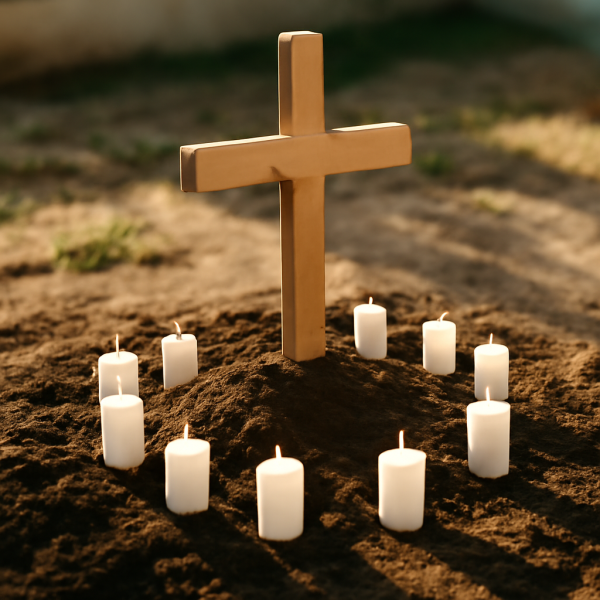
On June 30, residents gathered for a candlelight vigil in Danjuma's memory. Leaders who addressed the mourners called on Nigerian authorities and on international partners, including the United States government, to pay attention to the killings and press for security in Nigeria's Middle Belt. "We are tired of burying our people," one leader said. "We want peace. We want justice."
Miango sits in a stretch of central Nigeria where watchdog groups have tracked a rising pattern of assaults on Christian farming villages by armed Fulani militants, part of a broader wave of violence that has claimed thousands of lives across the Middle Belt in recent years. Community leaders have stopped short of calling for retaliation. Their request, repeated at the vigil, was for protection and for the killings to stop.
A Cry That Reaches Higher Than Jos
Now set that request beside itself for a moment, my friend, because it is worth turning over slowly. A people buried under grief, again, did not ask for vengeance. They asked for peace. There is something in that which the world does not manufacture on its own. Flesh and blood, left to itself, reaches for the sword. It takes a work of God to stand over a fresh grave and ask for justice instead of revenge.
That is not weakness. That is the oldest wisdom in the Book. The Lord has never asked His people to lay down their grief. He has asked them to lay down their vengeance, and to hand it to Him, because He alone can carry it rightly.
"Dearly beloved, avenge not yourselves, but rather give place unto wrath: for it is written, Vengeance is mine; I will repay, saith the Lord." (Romans 12:19)
That verse was not written for comfortable people. It was written for a persecuted church, scattered and hunted, who had every earthly reason to strike back and every heavenly reason not to. The believers in Miango stand in that same line tonight. So does every Christian family from Plateau State to Nigeria's northeast who has buried a husband, a wife, a child, because of the name they carry.
The gospel does not tell such a family that their pain is small or that it will simply pass with time. It tells them that the God who sees a sparrow fall has seen John Danjuma fall too, and has not looked away. Scripture is plain that the brokenhearted are not forgotten by heaven, however far they are from the attention of the powerful.
"The LORD is nigh unto them that are of a broken heart; and saveth such as be of a contrite spirit." (Psalm 34:18)
There is a temptation, watching news like this from a safe distance, to feel a flicker of pity and move on. Don't. A brother has fallen for the crime of being Christian in his own home. That ought to put a Christian in this country on his knees, first for the family left behind, and then in plain gratitude that he can worship this Sunday without a militia waiting on the road home.
Governments can and should be pressed to act, and it is right for voices in Washington to speak plainly for the persecuted church abroad. But the deepest answer to Miango's grief was not invented in a courtroom or a State Department briefing. It was settled at an empty tomb, where death itself lost its final word. The believers gathering by candlelight in Plateau State know that better than most of us ever will. Let their courage shame the comfortable, and let their prayer for peace instead of vengeance be preached, plainly, wherever this story is read.