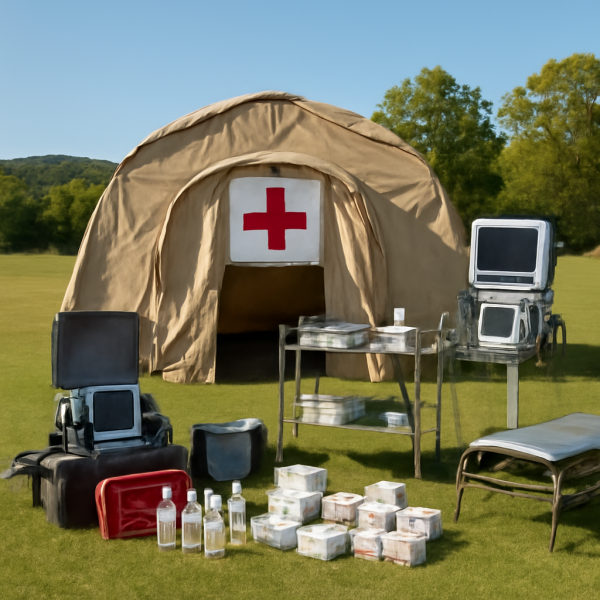
These portable hospital units, part of the Aarogya Maitri initiative, offer modular infrastructure capable of treating up to 300 patients. The deployment underscores India's commitment to global humanitarian assistance, guided by External Affairs Minister S Jaishankar's strategic diplomacy. This mission not only marks one of India's farthest humanitarian deployments but also reinforces the nation's role in global disaster response, including vital Venezuela earthquake aid.
The swift action by India, rooted in its philosophy of 'Vasudhaiva Kutumbakam' or 'The World is One Family,' highlights the importance of international solidarity in times of crisis. The deployment of BHISHM Cubes, with integrated trauma care, surgical, and diagnostic units, reflects India's blend of innovation and compassion in delivering comprehensive healthcare to disaster-stricken areas, showcasing the essence of Venezuela earthquake aid.
In times of distress, the call to aid those in need echoes loudly. The Bible reminds us of this duty:
"And if thou draw out thy soul to the hungry, and satisfy the afflicted soul; then shall thy light rise in obscurity, and thy darkness be as the noonday." (Isaiah 58:10)This scripture challenges us to look beyond our borders and extend a helping hand to those suffering, much like India has done in Venezuela.
But what does it mean to truly serve? It's a question that demands more than a simple answer. Service isn't just about responding to immediate needs; it's about embodying the love and compassion that Christ showed to all. It's about seeing the humanity in others, regardless of distance or difference.
India's response to Venezuela's crisis is a testament to the power of global cooperation. It challenges us to reconsider our own responsibilities as Christians. Are we willing to step out in faith and offer our resources, time, and love to those in need, even when it seems inconvenient or costly? The Venezuela earthquake aid initiative serves as a reminder of this call to action.
We often seek a manageable God, one who fits neatly into our schedules and plans. But the God of the Bible is a holy one, calling us to a radical love that transcends borders and boundaries. This call isn't always easy, but it's necessary. It's a call to be the light in a world filled with darkness.
As we reflect on India's humanitarian mission, let us be inspired to act in our own communities. Whether through prayer, financial support, or volunteering, each of us has a role to play in alleviating suffering and bringing hope to those in need, just as India has done through its Venezuela earthquake aid efforts.
Let us not forget the words of Isaiah, and let them guide us in our actions: to draw out our souls to the hungry, to satisfy the afflicted soul, and to let our light shine brightly in the darkness.