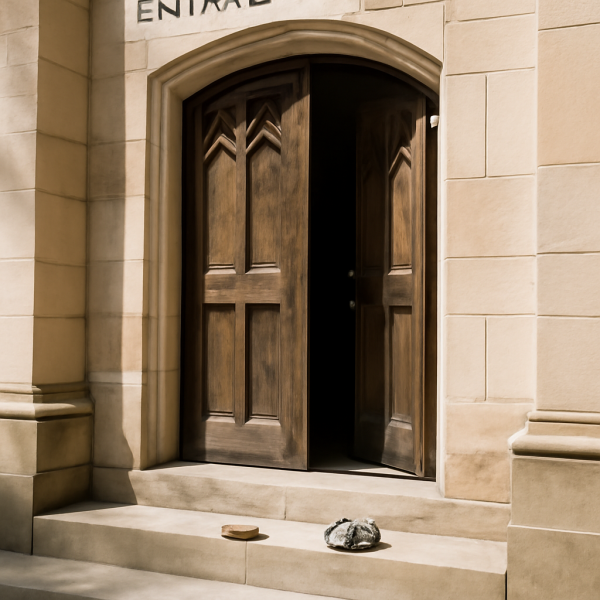
The church was founded in 1876 by American Presbyterian missionaries on land granted by the Qajar monarch Naser al-Din Shah. The order enforces a Revolutionary Court ruling handed down in 1998 that placed the entire ten-acre compound, including two schools and dozens of family homes, into regime hands. Church leaders say members have now been told to find another place of worship, and residents fear the historic compound may ultimately face demolition.
The move against St. Peter's follows a pattern. In recent years Iranian authorities have seized or shuttered Presbyterian churches in Tabriz and Mashhad and an Assemblies of God congregation in Gorgan. Taken together, monitoring groups say the actions form a deliberate government strategy: dismantle independent Protestant institutions one property at a time while tightening state control over what worship remains legal in the Islamic Republic.
Armenian and Assyrian Christians have worshiped in Persia since centuries before Islam ever reached its borders. They are recognized minorities under Iranian law, permitted to hold services in their own languages, yet barred from evangelizing Muslims and, as this case shows, unable to secure their own deeds against a government willing to reach back nearly thirty years to a court order and enforce it whenever convenient.
A Church Is More Than a Deed
Now here is where the story turns, my friend, because a courtroom in Tehran can sign away ten acres, but it cannot sign away a church. Not really. Land can be confiscated. A building can be padlocked, gutted, even bulldozed to dust. Families can be told to pack their belongings and go. But the church that Christ built was never made of brick and title deeds in the first place. It was built out of people.
Simon Peter said one thing to Jesus — "Thou art the Christ, the Son of the living God" — and Jesus answered him with a promise that has outlasted every empire that ever tried to break it.
"And I say also unto thee, That thou art Peter, and upon this rock I will build my church; and the gates of hell shall not prevail against it." (Matthew 16:18)
Think about the weight of that. Rome tried to prevail against it and fed believers to lions. It is still standing. The Soviets tried, sealing church doors across an entire continent. It is still standing. And an Islamic Republic's property court, no matter how patiently it waits three decades to spring its ruling, will not manage what Rome and Moscow could not.
That does not mean the loss in Tehran is small. It is not. Families who have lived on that compound are being uprooted from their homes, and a congregation that has gathered on that ground since before the American Civil War is being told to go find somewhere else to kneel. Grieve that. It is a real wound to real people, and nothing about the promise of Christ erases the pain of a family packing boxes under threat of eviction.
But the promise does mean something for how you carry that grief. The writer of Hebrews, addressing believers who had already lost houses and property for their faith, put it plainly:
"For here have we no continuing city, but we seek one to come." (Hebrews 13:14)
Every deed on this earth is temporary. Every building made by human hands will someday fall — by earthquake, by fire, by a regime's decree, or simply by time. That was never the plan of salvation. The plan was always a people, indwelt by the Spirit of the living God, who could be scattered from every building on earth and still be, wherever two or three of them gathered, the true and unshaken church.
So pray for the Armenian and Assyrian families of the Qavam Church tonight. Pray they find four walls to meet in, and pray the government of Iran deals honestly and mercifully with them in the weeks ahead. But do not pray as though the gospel depends on that building. It never did. The gates of hell threw everything they had at that promise two thousand years ago, and they are still losing.