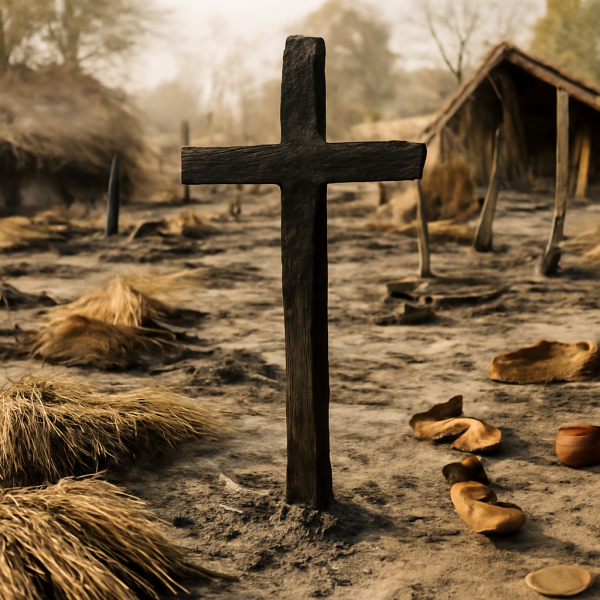
The August 9 attack, carried out by fighters of the Islamic State Central Africa Province (ISCAP), killed 32 Christians and captured 24 more, and burned down more than 60 homes and shops. Nine days earlier, on July 31, ISCAP fighters struck the village of Monguiko, killing 17 believers and taking two captive. In separate raids on July 20 and July 24, the militants killed 35 people, including the beheading of at least 25 of them. On August 6, fighters attacked a river boat near the town of Biondo, killing five people aboard.
ISCAP, known until recently as the Allied Democratic Forces and pledged in allegiance to the Islamic State, has killed more than 1,300 Christians in northeastern Congo since December 2024, the overwhelming majority of them in Ituri and the neighboring province of North Kivu. The United Nations has reported that surging violence in Ituri is severely disrupting humanitarian operations across the province, even as an Ebola outbreak declared in May has killed more than 1,800 people in the same region. Millions across northeastern Congo have already been driven from their homes by years of overlapping conflict.
A Question Older Than the Rifle
Ituri sits half a world away from wherever this is being read, and for most who glance at the number 130 in a headline, it will pass like weather reported from another hemisphere. But look closely at what the killers were doing on those roads in Mambasa Territory. They were not raiding for gold, or copper, or grain, though Congo's ground is heavy with all three. They came asking one question of every man, woman, and child they cornered, and the answer decided who lived. Twenty-five people chose the fire and the machete over denying the name of Jesus Christ. That is not random cruelty, my friend. That is the oldest war there is, fought now with rifles and blades instead of lions and stakes, but it is the same war, and it has never stopped.
Scripture does not soften what happened to them, and it does not tell you their deaths were meaningless or wasted.
"Precious in the sight of the LORD is the death of his saints." (Psalm 116:15)
Precious. Not a statistic added to an aid ledger, though the ledger keeps growing — 130 in three weeks, more than 1,300 since a Christmas season two years gone. Every one of those names is written in a book no wire service can access, kept by the God who numbers the hairs on a man's head and who marked the hour each of them went home. The Lord Jesus did not promise His followers an easy road for carrying His name. He told them plainly what the world would do to them for it, and He told them what it would mean.
"Blessed are they which are persecuted for righteousness' sake: for theirs is the kingdom of heaven." (Matthew 5:10)
Blessed. Not cursed, not forsaken, not forgotten — blessed, with a kingdom waiting that no militia can burn down and no river can swallow. Most who read this will never face a blade for the name of Christ. But the choice those villagers made in an instant is the same choice standing before every soul on earth, only most are given a lifetime instead of a moment to decide it: will you belong to Him, whatever it costs, or will you keep your life on your own terms and lose the only life that lasts? The believers of Monguiko and Mambasa answered that question with their blood. The rest of the world gets the mercy of answering it while there is still time to mean it.