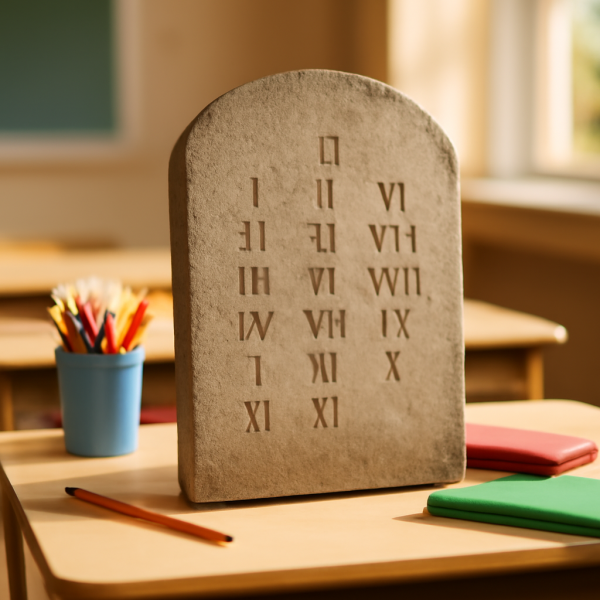
Plaintiffs Emily Roth, Audrey Nath and Sanjam Kaur Sohal sued on behalf of themselves and six children enrolled in the Spring Branch and Cypress-Fairbanks school districts. Their suit targets Texas Education Code Section 1.0041, enacted through Senate Bill 10, which requires every public elementary and secondary classroom in the state to post a state-selected, King James Version rendering of the Ten Commandments no smaller than 16 by 20 inches, hung where students cannot avoid seeing it.
Unlike an earlier federal challenge, this lawsuit rests entirely on Texas law. The mothers argue the mandate violates the 1999 Texas Religious Freedom Restoration Act, which bars government agencies from substantially burdening a person's free exercise of religion, and the Parental Rights Amendment that Texas voters added to the state constitution on November 4, 2025, by a margin of roughly seventy percent. That earlier federal fight ended in April, when the full Fifth Circuit Court of Appeals ruled 9-8 in Rabbi Nathan v. Alamo Heights Independent School District that a passive classroom display does not coerce belief or violate the First Amendment, a case widely expected to reach the U.S. Supreme Court. The Harris County suit now heads toward a preliminary injunction hearing later this month.
Whatever that courtroom ultimately decides about a poster on a cinderblock wall, the Ten Commandments themselves were never meant to hang there for decoration. They were cut into stone on a mountain, and stone was the fitting material, because what those ten words demand of a man, no framed copy and no classroom wall can produce in him. A law can be posted. It cannot be kept, not by the sharpest schoolchild in the room, not by the judge who rules on it, not by the parent who fights over it.
A Law No Wall Can Keep
That has always been the trouble with the law of God. It is not unclear. "Thou shalt not kill" needs no lawyer to interpret it. "Thou shalt not steal" needs no committee to explain it. The trouble is not that men cannot read the commandments. The trouble is that no man has ever kept them, not for one full day, not in thought, word, and deed together. Post them sixteen inches by twenty in gold letters on every wall in Texas, and you will have done something worth doing, and still every soul that reads them will stand condemned by the reading.
That is exactly what the law is for. It was never given as a ladder for a man to climb into heaven by his own effort. It was given to show him he cannot climb at all.
"Wherefore the law was our schoolmaster to bring us unto Christ, that we might be justified by faith." (Galatians 3:24)
A schoolmaster does not save the pupil. He drives the pupil to the one who can. That is the whole use of the Ten Commandments hung on a wall or written on a heart: not to make a man righteous, but to show him he is not, and to send him running to the only Righteous One who ever kept every one of those ten words without failing once, and who then went to a cross to bear the penalty due to every soul who never could.
My friend, you can win every lawsuit over where the commandments hang and still lose your own soul under their weight. The mothers in Harris County are wrestling over a poster. The deeper wrestling belongs to every heart that has ever broken even one of those ten laws, which is to say, every heart that has ever beaten. There is no courtroom on earth that settles that case. There is only a cross, and an empty tomb, and a Savior who paid what the law demanded and now offers, freely, the righteousness no classroom wall could ever hang.
The law shows the debt. Grace pays it. That verdict does not wait on a preliminary injunction hearing. It is available today, to whoever will believe it.