Karachi Mob of Hundreds Besieges Christian Family Over Fake Blasphemy Charge
A false blasphemy claim triggered a mob in Karachi, trapping Christian families until Rangers and police intervened to save them.
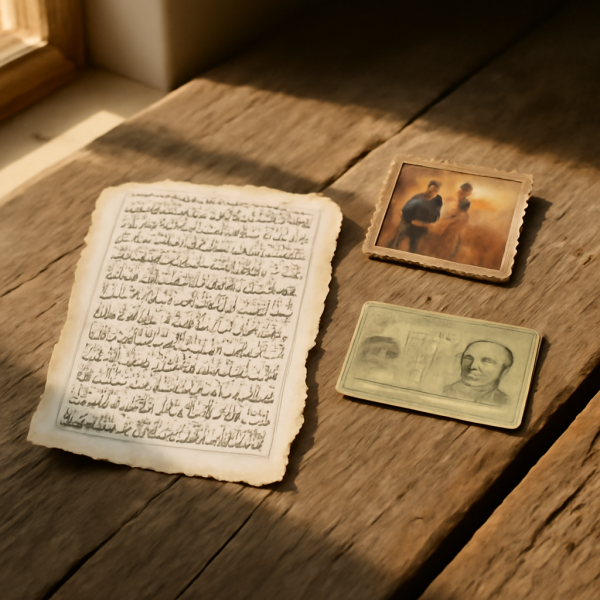
On July 9, an envelope arrived at a small store on a residential street in Karachi, Pakistan. Inside was a burnt page torn from a Quran, along with photographs of a 40-year-old Catholic man named Azeem Javaid, a picture of his mother, and a copy of her national identity card. Within hours, word of the alleged desecration spread through the neighborhood, and several hundred Muslims, including activists from hardline religious parties, gathered outside Javaid's home.
Ten to fifteen Christian families lived on that street. They were trapped inside their houses as the crowd swelled outside. Javaid was at work when the mob formed and went into hiding rather than return home. The Sindh provincial government deployed paramilitary Rangers alongside additional police units to contain the crowd, and officers later used an armored vehicle to evacuate the family to safety.
An initial inquiry has since found the blasphemy allegation to be false. A source close to the family said Javaid had an outstanding financial dispute with certain individuals, and investigators believe someone sought to frame him by manufacturing the appearance of a desecrated Quran. Muslim religious leaders from multiple schools of Islamic thought joined civil authorities in working to calm the crowd, a cooperation credited with preventing the kind of mob violence that has burned churches and homes in Pakistan before. Roughly 2.6 million Christians live in Pakistan, about 1.27 percent of the population, making them the nation's second-largest religious minority after Hindus. One of the women rescued that day told reporters that although her family is now physically safe, the fear has not lifted.
A fabricated accusation nearly cost a family their lives before a single fact was checked. That is the terror of a mob: it does not wait on truth. It moves on rumor, on a torn page and a photograph slipped into an envelope by someone with a grudge, and it is prepared to burn a house down before anyone asks whether the charge is even real.
When the Crowd Becomes the Judge
There is an old, ugly pattern here, and it did not begin in Karachi. It goes back to a courtyard in Jerusalem, where a crowd was stirred up to cry for the death of an innocent man. Pilate found no fault in Him, and the mob roared anyway. Mobs do not require guilt. They require only enough anger, pointed by someone with a motive, and a target too weak to defend himself.
Azeem Javaid did nothing but exist as a Christian on a street where an enemy wanted him gone. That is the position many believers occupy in this world, not because of any wrong they have done, but because their faith itself is treated as provocation. Scripture never promised the righteous a mob-free life. It promised something better: a Judge who cannot be stirred up by rumor, who does not need photographs slipped in an envelope, who already knows the truth before the accusation is spoken.
"Fear not them which kill the body, but are not able to kill the soul: but rather fear him which is able to destroy both soul and body in hell." (Matthew 10:28)
That word was spoken to men Christ was sending out into exactly this kind of danger. He did not tell them the danger was imaginary. He told them where their fear belonged. A crowd outside the door can take a house, take a livelihood, even take a life. It cannot touch the soul of a person who belongs to God. That is not a comfortable platitude to a family hiding behind a locked door while hundreds shout in the street. It is the only thing sturdy enough to stand on when everything else gives way.
The woman rescued from that street said the fear has not left her. No one should pretend it ought to vanish overnight. But fear and faith can occupy the same heart without faith losing the fight, because faith is not the absence of fear, it is trust that outlasts it. The God who numbered the hairs on the heads of those trembling believers in Karachi numbers yours too.
A Truth No Mob Can Overturn
An inquiry cleared Azeem Javaid's name. Investigators do not always move that fast, and sometimes the truth arrives after the damage is already done. But there is a Judge whose verdicts never require a second inquiry, who was falsely accused Himself and went to a cross for it, and who rose again to prove that no manufactured charge, no mob, no grave gets the final word. Whoever will call on His name is not measured by the accusations men invent, but by the righteousness He freely gives. That is the only safety that does not depend on which way a crowd turns next.