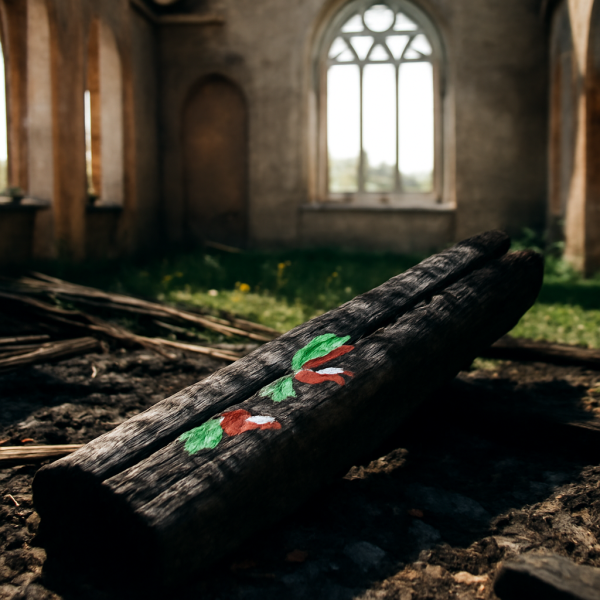
The New Brunswick Office of the Fire Marshal determined the blaze had been intentionally set. Investigators named 68-year-old Gilles Mallet, of Saint-Simon, as a person of interest early in their inquiry and arrested him that same day. He has been charged with arson and remains in custody. His bail hearing opened in Bathurst provincial court on August 28, did not conclude, and is scheduled to resume September 8. A publication ban covers what has been said in that courtroom, and Mallet has not yet entered a plea.
The loss lands hard on a small community. Saint-Simon's church was not a monument behind glass; it was where the village baptized its children, buried its dead, and gathered on ordinary Sundays for longer than a century. Now the building is ash, and the people who worshipped inside its walls are left standing in a field looking at nothing.
This fire does not stand alone. Investigators and researchers on both sides of the border have been tracking a rise in fires and vandalism at houses of worship across Canada and the United States in recent years, a pattern that has put congregations, insurers, and denominational leaders on edge from Michigan to Montana to the Maritimes. Whatever the courts eventually determine about Mallet's case, the wider trend is real, and it is Christian sanctuaries that keep turning up burned.
A Building Can Burn. The Church Cannot.
Here is the turn worth making, friend, and it is not a small one. The people of Saint-Simon lost their sanctuary in the space of an hour, and no one would tell them that loss is small. Wood and stained glass and a century of memory do not come back. But the church, the real church, the one the Lord Jesus Christ is building, was never made of timber. It was never a roof or a steeple. It is people, redeemed by blood, gathered by the Spirit, and no match, no arsonist, no mob, and no government can burn that down.
Paul wrote to believers who had lost everything and had every reason to grieve, and he did not tell them the loss did not matter. He told them where their hope actually stood.
"For we know that if our earthly house of this tabernacle were dissolved, we have a building of God, an house not made with hands, eternal in the heavens." (2 Corinthians 5:1)
That verse was written about the human body, but the principle runs straight through every earthly thing you love, including a church building raised by your grandfather's hands. Everything made by hands can be unmade. Fire finds wood. Rust finds iron. Time finds everyone. The man or woman who has put all their hope in a building, even a sacred one, will one day stand in the ashes and wonder what is left. But the man or woman who has put their hope in Christ Himself stands on ground fire cannot touch.
This is not an argument for indifference. Grieve the loss. Rebuild the walls if the Lord provides a way. Pray for the investigators seeking the truth, and pray for the accused man himself, that whatever brought him to that field in the dark hours of an August morning, mercy and justice would both be served. Scripture does not ask believers to celebrate destruction or to write off the guilty as beyond hope; it asks them to hold fast to what cannot be shaken.
The writer of Hebrews put it plainly for a people who had already lost property for the sake of their faith:
"For ye had compassion of me in my bonds, and took joyfully the spoiling of your goods, knowing in yourselves that ye have in heaven a better and an enduring substance." (Hebrews 10:34)
Saint-Simon will rebuild or it will not. Either way, the gospel those walls once sheltered is not homeless. It never needed four walls to be true, and it will still be true long after every stone laid by human hands has gone back to dust.