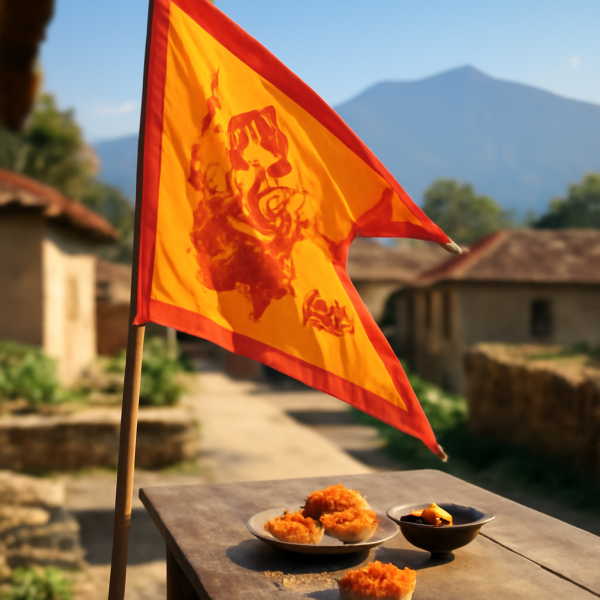
The violence broke out on July 26 in Dewanganj, a village in Nepal's Sunsari district in the Tarai lowlands near the Indian border. A clash erupted after members of the local Muslim community objected to loud music and the replacement of religious flags on poles during a Hindu Bolbam procession. At least three people were killed and several others seriously injured before the fighting was brought under control.
In the weeks that followed, groups including Hindu Jagaran, Hindu Samrat Sena, Hindu Swayamsevak Sangh, and local Bajrang Dal units pressed the government in meetings held in Janakpur and at the District Administration Office in Dhanusha. Home Minister Sudan Gurung led the government's side of the discussions. The talks produced a 13-point agreement in which the government, now headed by Prime Minister Balendra Shah, committed to an all-party discussion on restoring Nepal's Hindu state status, a designation the country carried for centuries under its monarchy before the 2015 constitution established it as a secular republic.
Nepal's Christian community, small by national standards but among the fastest-growing in the world, has watched the development with unease. Official census figures put Christians at less than two percent of the population, though church leaders and mission researchers estimate the true number is far higher, with some believers reporting a several-fold increase in congregations over the past two decades. Pastors in Sunsari district say at least one church has already closed its doors to in-person worship, moving services online after receiving threats. Believers elsewhere describe growing intimidation simply for speaking about their faith in villages and public markets.
What a nation calls itself, and what a heart calls Lord
Now here is where the newspaper account has to give way to something older than any constitution. Governments have voted themselves Hindu, Buddhist, Muslim, Christian, and secular, and not one of those votes has ever settled the question that actually matters to a man or woman standing before God. A nation can pass a law. It cannot pass a law that reaches into the heart and makes it believe. That has never been in the power of Parliament, King, or committee, in Kathmandu or anywhere else.
The believers in Sunsari who kept worshiping after their sanctuary closed, who moved their hymn singing onto a screen rather than stop it altogether, understood something the framers of any national religion law tend to forget. The church was never a building the state could license. It was never a status the state could grant or revoke. It is a people bought with blood, gathered wherever two or three are, and no thirteen-point agreement in Janakpur changes that arithmetic one bit.
Scripture does not counsel Christians to riot against their rulers or scheme against their neighbors. It counsels something harder and higher: honor the office, obey every law that does not require sin, pray for the men in power by name whether you voted for them or not. But when a government's demand and God's claim finally collide, the New Testament does not blink.
"Then Peter and the other apostles answered and said, We ought to obey God rather than men." (Acts 5:29)
That is not a rebel's slogan. It is the settled peace of men who had already been threatened, beaten, and jailed for preaching Christ, and who went right on preaching. The Christians of the Tarai facing down loudspeaker threats and shuttered doors stand in that same line, whether Nepal's Parliament ultimately votes for a Hindu state or against one.
My friend, you may never face a mob or a magistrate over your faith. But every one of us faces the quieter version of that same choice nearly every day, when the crowd wants one thing and Christ wants another. The Lord who kept His church alive under Caesar, under the Sanhedrin, and under every hostile decree since, has not lost His grip on Nepal, and He has not lost His grip on you.
"Blessed are they which are persecuted for righteousness' sake: for theirs is the kingdom of heaven." (Matthew 5:10)
A kingdom cannot be legislated into a heart, and it cannot be legislated out of one either. That is the good news the church in Sunsari is living out this week, and it is the good news waiting for anyone, in any nation, who will bow the knee to the true King.