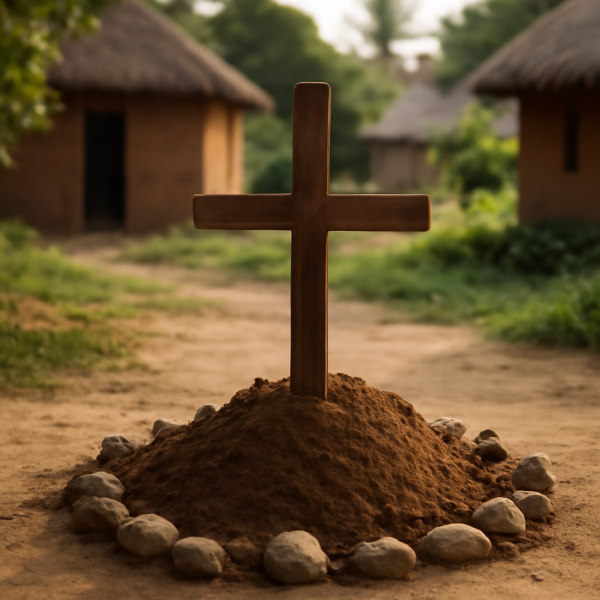
Nigerian security forces did not reach Naridon until hours after the attackers had fled, a delay that has drawn sharp criticism from residents and local officials alike. Homes were burned, four survivors were left in critical condition, and the Kaduna state government publicly condemned the killings, ordering a crackdown on those responsible. Nigerian President Bola Tinubu directed security chiefs to hunt down the militia behind the attack.
On the evening of Monday, August 3, that hunt produced its first arrest. Troops from Sector 3 of Operation Enduring Peace carried out an intelligence-led raid on a residence in Dutsen Kura village, in Bassa Local Government Area of neighboring Plateau State, and took into custody Salihu Miakailu, a 48-year-old Fulani Muslim suspected of taking part in the massacre. A military source said Miakailu remains in custody while investigators "work to establish the full scope of his involvement and uncover any accomplices connected to the attack." Officials describe the arrest as part of a broader operation targeting suspects tied to a string of attacks across Kaduna and Plateau states, where Christian farming villages have borne the weight of Nigeria's long, grinding season of sectarian bloodshed.
One Arrest, Thirty Graves
A man is in custody now. That is something — a government owes its people at least that much, and Nigeria's soldiers earned a measure of thanks for the work of August 3. But an arrest does not lift eleven children back into their mothers' arms. It does not undo the eleven o'clock hour when armed men came walking into a sleeping village, and it does not answer the question every survivor is asking under their breath: why did the soldiers come only after the killers were gone?
My friend, that question is older than Nigeria, older than Kaduna State, older than any of us. Wherever men have gathered to worship the true and living God, there have been other men waiting in the dark to snuff that worship out. The names change — Nero's arena, Stalin's camps, a jungle path in Kauru Local Government Area — but the wound is the same wound, and the answer God gives is the same answer He has always given.
He does not always stop the blow before it falls. Scripture never promised that. What He promises is that He is near to the ones the blow falls on.
"The LORD is nigh unto them that are of a broken heart; and saveth such as be of a contrite spirit." (Psalm 34:18)
Nigh. Not far off watching from a distance, not indifferent to the smoke rising over a burned house — nigh, close, present in the very room where the grief is thickest. That is the God of the Bible, and He does not need a soldier's escort to reach a broken heart in Kamaru Ward before anyone else does.
There is a second word worth carrying alongside that one, spoken by the Lord Jesus Christ Himself the night before His own body was broken by wicked hands:
"These things I have spoken unto you, that in me ye might have peace. In the world ye shall have tribulation: but be of good cheer; I have overcome the world." (John 16:33)
That is not a slogan for hard days. That is the whole of the gospel compressed into one sentence. The world will have its Naridons. Men will keep taking up arms against the church, and the church will keep burying its dead — until the day Christ returns and ends it for good. But every believer who died in that village on July 26 died already victorious, because the grave that could not hold their Savior cannot hold them either. That is not a comfortable word. It is a true one, and it is the only word strong enough to stand over thirty graves.
If you have never settled the matter of your own soul before God, do not wait for a night like this one to force the question. Christ died for sinners, rose from the dead, and offers peace tonight to anyone who will come to Him in repentance and faith — not peace from every earthly danger, but the peace that outlasts every danger there is.