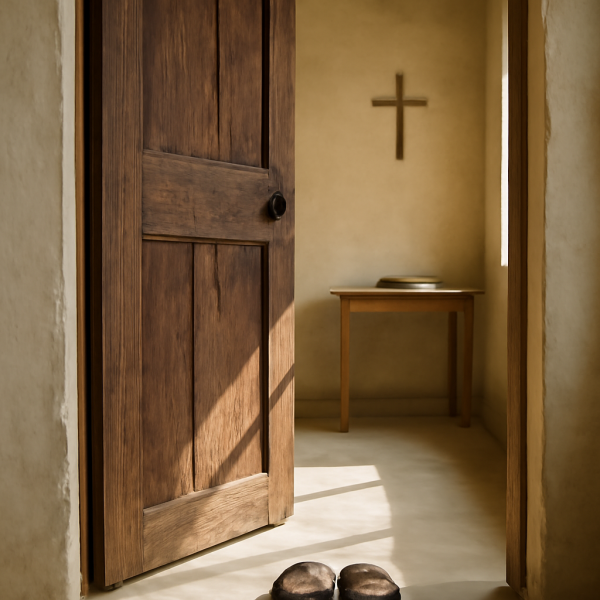
Sarah, now 22, fled her family's home in Kano State in 2025 after her older siblings beat her and tried to force her into a marriage she did not want. She found shelter with a Christian family, the Abaras, and while living under their roof she came to faith in Christ and was baptized out of Islam. When her siblings learned of her conversion, they brought the matter to the Hisbah, who tracked her down, arrested her, and held her for four days. During that detention, the court found, officers beat her and pressed her to renounce her new faith and return home to the marriage she had fled.
In its ruling, the court called the Hisbah's conduct a "flagrant violation" of Sarah's fundamental right to human dignity and to freedom of religion, and ordered the state to pay her compensation for what was done to her in custody. But the danger has not lifted from the family that took her in. After Sarah relocated to the city of Jos for her own safety in January 2026, her siblings accused the Abaras of kidnapping her. The family was arraigned in a Kano courtroom on February 26, 2026, without legal counsel present, and the criminal case against them is still active. ADF International says it is now supporting the Abara family's legal defense, arguing that Nigeria's religious police have no jurisdiction over Christians in the first place.
A Freedom No Courtroom Can Grant
A judge in Kano has now settled what the law will and will not permit a young woman's own household to do to her. That is no small thing, and it is worth being grateful for a court that looked at a beaten girl and called the beating what it was. But the ruling cannot settle the deeper question sitting underneath it: what a soul is free to become, and what it costs to become it.
Sarah did not go looking for a lawsuit. She went looking for shelter, and in the home of strangers who took her in, she met the living God. That decision cost her four days in a cell and blows from men who wanted her silent. It is still costing the Abara family, who stand accused in a Kano courtroom of nothing more than opening their door. My friend, that is what it has always looked like to follow Jesus Christ where His name is not welcome. He never promised His people an easy road. He promised something better — Himself, and the truth that sets a captive free no matter what a magistrate rules.
"If the Son therefore shall make you free, ye shall be free indeed." (John 8:36)
There is a freedom no Hisbah patrol can take away and no court order can fully grant, because it was never theirs to give. It is the freedom of a heart that has been washed clean and adopted into a new family — the family of God, purchased at the cross, sealed by the resurrection. Sarah lost her home. She lost, for a time, her safety. The Lord Jesus was plain about this trade a long time before Kano State ever heard her name.
"He that loveth father or mother more than me is not worthy of me: and he that loveth son or daughter more than me is not worthy of me" (Matthew 10:37). That is a hard word, and Christ meant it to be hard. But He did not leave it there. To everyone who has laid down family, comfort, and standing for His sake, He promises a hundredfold in this life and life everlasting in the next. The Abaras believed that when they let a frightened girl in out of the cold. They are still believing it now, waiting on a courtroom.
Whatever your family made you, whatever a government permits or forbids, the door Christ opens stands wider than any of it. He is still receiving the runaway, the outcast, the one nobody else will shelter. That door has never once needed a judge's signature.