Intersociety says 437 of those deaths and 393 of the abductions happened in July and August alone, and that at least 25 priests and pastors were killed or taken captive during the eight-month span. Umeagbalasi, who has tracked the violence since the Boko Haram insurgency began in 2009, now places the nationwide death toll for Christians since that year at 130,783, with 82,603 kidnapped or abducted over the same stretch.
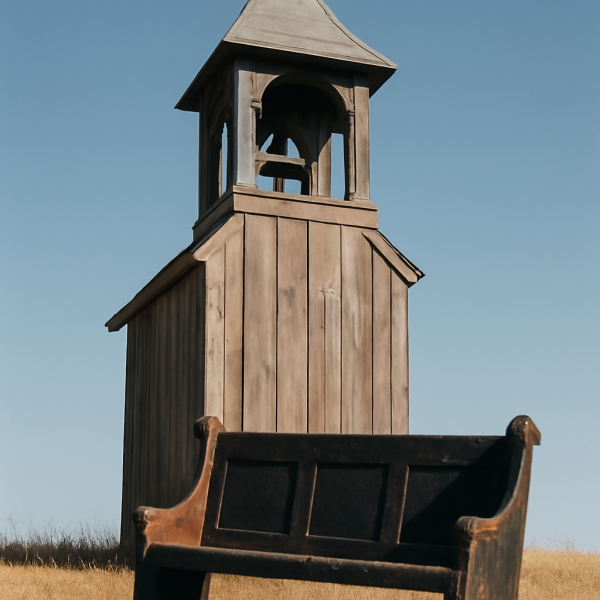
The damage to churches is concentrated in Nigeria's Middle Belt, where the mostly Muslim north meets the mostly Christian south. In Taraba State, the Catholic Diocese of Wukari recorded 239 church buildings attacked or destroyed between September 2025 and August 2026 alone, with roughly 100,000 parishioners driven from their homes and eight priests' residences burned or wrecked. Farther south in Benue State, Bishop Wilfred Chikpa Anagbe of the Diocese of Makurdi has spent months describing his diocese as a killing ground, as armed herdsmen push into farmland that Christian families have worked for generations.
A number like 3,083 goes down easy on a page. It does not go down easy in a kitchen in Taraba State where a chair sits empty, or in a churchyard in Benue where the bell has not rung since the fire. Statistics are a mercy for record-keeping and a poor vessel for grief. Behind every digit in that report is a name, a face, a family that buried someone or is still waiting to know whether they need to.
Scripture does not ask believers to pretend the numbers do not matter. It asks something harder: to look straight at the killing and still trust that the dead in Christ are not lost to Him.
"And they overcame him by the blood of the Lamb, and by the word of their testimony; and they loved not their lives unto the death." (Revelation 12:11)
That verse was written for people under the knife, not people comfortable enough to admire it from a distance. The Christians of Taraba and Benue did not choose the raid that came for their village. They did choose, long before it came, who they belonged to. That is the whole of the Christian witness in a hard place — not that suffering is avoided, but that it does not have the last word.
What the World Calls Loss, Heaven Calls Harvest
Jesus was plain about the cost of following Him in a hostile world, and just as plain about what stands on the other side of it.
"And fear not them which kill the body, but are not able to kill the soul: but rather fear him which is able to destroy both soul and body in hell." (Matthew 10:28)
That is not a promise that the herdsmen's guns will be turned aside every time, or that every priest will escape the fire. It is a promise about what survives the fire. A soul kept by Christ is kept past the reach of any militia, any raid, any report with a rising body count.
The task for a believer reading these numbers from a safe distance is not despair and not indifference — it is remembering that the Church in Nigeria is not a statistic to be managed but family to be carried in prayer, named before God by name where the names are known, and honored for holding fast where holding fast costs everything.