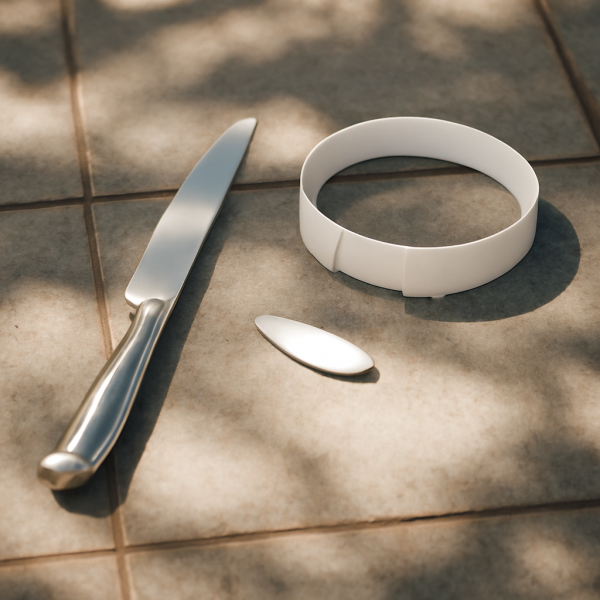
Police say 45-year-old Edward Koubek, a server at the restaurant, greeted the priest warmly when the group first arrived, telling him he recognized him from church and embracing him. As the group left after the meal, witnesses believed Koubek had returned to give the priest a farewell hug. Instead, officers say, he drove a knife into the priest's back and shoulder repeatedly. Hospital staff told investigators Father Sandoval-Pliego suffered wounds that nicked a blood vessel.
Koubek was arrested at the scene and has been charged with second-degree felony aggravated assault with a deadly weapon. According to police, he told investigators, "He used to make fun of me," explaining that he had attended San José Church since 2018 and had come to believe the priest snickered at him after hearing his confessions. A judge set bail at $18,000 and ordered Koubek to have no contact with the priest and to stay away from both the church and the restaurant.
Two days after the attack, Father Sandoval-Pliego issued a statement from his hospital bed. "My recovery is faster than we anticipated," he said, "and it is because of your prayers. I am deeply grateful." The Diocese of Austin says he is expected to make a full recovery.
A Wound Given in the Confessional
Now here is a strange and sorrowful thing, my friend. A man knelt down, by his own telling, for eight years or better, in that little dark room where a sinner tells his sins to God through the ear of a priest. And somewhere in those years, a wound got planted in him — not a wound the priest gave him on purpose, so far as anyone has said, but a wound of the mind, a suspicion that grew like a weed nobody pulled up. He came to believe the very man who absolved him was laughing at him. And that suspicion, left to fester, turned into a knife in a man's back on a city sidewalk.
That is what an unforgiven grudge does. It does not stay small. It does not stay in the heart where it was born. Given enough years, it walks right out into the street and does something terrible. The Book of Hebrews warns of "any root of bitterness springing up" to trouble a man, and here is that root, grown up tall and gone to seed.
But look at the other man in this story — the one bleeding on the pavement. A priest, wounded by the very sheep he was sent to shepherd, and within forty-eight hours he is not cursing his attacker. He is thanking the people who prayed for him. That is not natural. Men do not usually respond to a knife in the back with gratitude and grace. That response comes from somewhere else — from a Savior who was struck, and mocked, and nailed up by the very people He came to save, and who, hanging there bleeding, asked His Father to forgive them.
This is the whole scandal and the whole glory of the Christian gospel. It does not tell you to swallow your hurt and pretend it away. It tells you to bring it to the cross, where a greater hurt was already carried for you.
"But I say unto you, Love your enemies, bless them that curse you, do good to them that hate you, and pray for them which despitefully use you." (Matthew 5:44)
That is not a soft word. That is one of the hardest commands in all of scripture, and Jesus Christ is the only one who ever kept it perfectly — loving the men who drove the nails, praying for the soldiers casting lots for His clothes. He does not ask you to manufacture that love out of your own grit. He asks you to receive His love first, and let it overflow into the hardest cases you know — even, maybe, a man who's been carrying a grudge against you for years without your knowing it.
My friend, somebody may be walking around today nursing a wound you never meant to give. And you may be nursing one somebody else never meant to give you. Confession, forgiveness, the mercy seat — these are not decorations on the Christian faith. They are the only things strong enough to pull a root of bitterness up before it bears this kind of fruit. Take it to the Lord. Do not let it wait eight years.