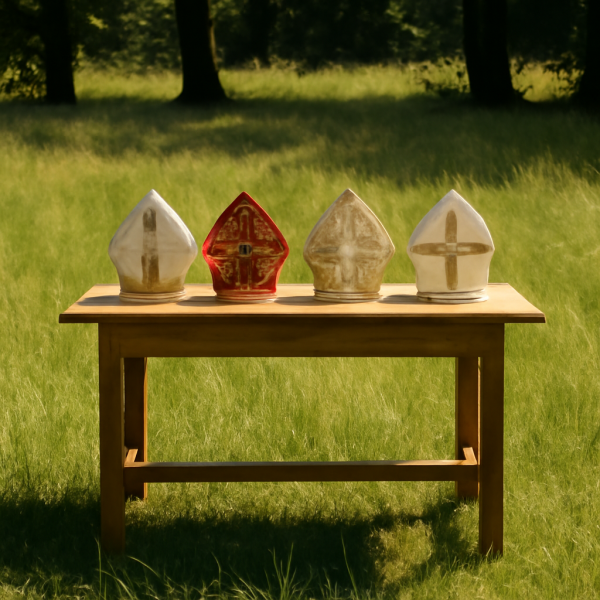
The Vatican had warned for weeks that the ceremony would amount to what canon law calls a schismatic act. On the eve of the consecrations, Pope Leo XIV wrote directly to the Society's superior general, pleading in his own words: "I plead with you and ask you with all my heart: please turn back!" The appeal went unheeded.
Within days the Holy See confirmed that six men connected to the ceremony — the two consecrating bishops and the four newly consecrated — had incurred automatic excommunication under Church law. Rome also revoked the faculties that had allowed Society priests to validly hear confessions and witness marriages, meaning those sacraments as administered by SSPX clergy are no longer recognized. The Society disputes that the excommunications are valid.
The scene deliberately echoed history. Thirty-eight years earlier, in that same meadow, the Society's founder, Archbishop Marcel Lefebvre, consecrated four bishops against the express order of Pope John Paul II — an act that brought his own excommunication and left the Society on uncertain footing with Rome ever since. The 2026 consecrations reopen a fracture many had believed was at least contained, if never fully healed.
What Authority Is For
Strip away the canon law citations and the Latin, and what's left standing in that Swiss meadow is a question as old as Eden: who has the right to speak for God, and what happens when a man decides he answers to no one else?
Every soul wrestles with authority somewhere. Maybe it isn't a bishop's mitre for you. Maybe it's a father, a government, a pastor, a board of deacons. Something in the fallen heart wants badly to trust its own judgment above every other voice — even a voice that means well, even a plea as plain as "please turn back." That is not new. That is Genesis chapter three, wearing new vestments.
Scripture does not leave the matter murky. There is such a thing as legitimate authority, and God takes it seriously. But scripture is just as plain that no institution, no order, no council, however venerable, is the rock the church is built upon. Only one foundation holds.
"And I say also unto thee, That thou art Peter, and upon this rock I will build my church; and the gates of hell shall not prevail against it." (Matthew 16:18)
Christ did not say a synod would build His church, or a society, or a see. He said He would build it — on the confession that He is the Christ, the Son of the living God. Popes fall, councils err, movements fracture and excommunicate one another over rubrics and lines of succession that matter a great deal to the men inside them and precious little to the watching world. None of that shakes the foundation, because the foundation was never a man to begin with.
That does not make Écône a small matter. Souls are caught in it this week — priests uncertain whether their sacraments hold, families torn between loyalty to tradition and loyalty to Rome, a pope who begged in ink for men he loves to turn back. Grieve for that. Division in the body of Christ is never a triumph for anybody. Paul begged the Corinthians for the very unity Rome now begs of the Society, urging believers to "endeavouring to keep the unity of the Spirit in the bond of peace" (Ephesians 4:3).
But here is the mercy in it, friend. You do not have to sort out apostolic succession to stand on solid ground. You do not have to pick a side in a Swiss meadow to be safely inside the church the gates of hell cannot touch. You only have to do what Peter did before he was ever called a rock — confess that Jesus is the Christ, the Son of the living God, and build your house on Him alone. Every other foundation, however old, however honored, will one day be tested by fire. His will not move.