One pastor in the capital, whose name is withheld for his safety, described the method plainly: "They come with papers, with promises, and with threats. Then they divide the shepherds so that the sheep become easy to scatter." Once a congregation splits, he said, the weakened faction is either coerced into compliance or the building is simply taken by court order.
The seizures come as United Nations Secretary-General's Personal Envoy for Sudan, Pekka Haavisto, traveled to Khartoum from September 8 to 10 for talks meant to support an inclusive political process toward civilian government. On September 10, he met with Sudanese church leaders, who told him of damaged and looted places of worship and of years of marginalization and bureaucratic interference that have only worsened since the war began.
The toll on Sudan's churches lands against a grim backdrop. Open Doors' 2026 World Watch List placed Sudan fourth among the world's most dangerous countries to be a Christian, its highest score yet, as the nation's civil war between the Sudanese Armed Forces and the Rapid Support Forces has ground on for more than three years, killing tens of thousands and displacing millions.
A Church That Outlasts the Deed
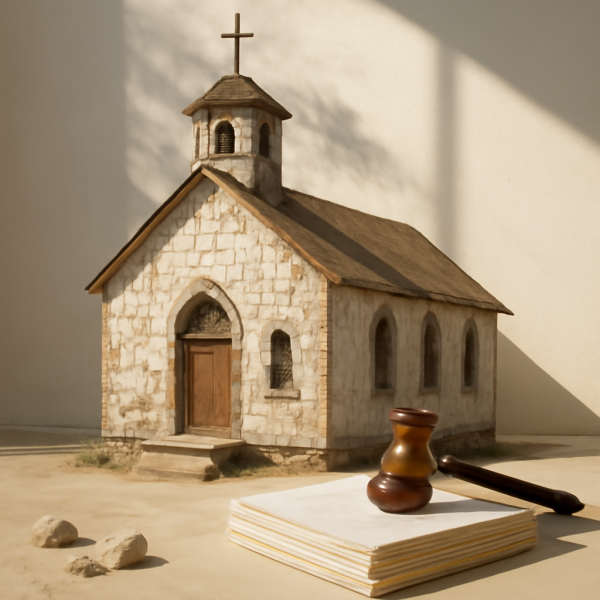
Set beside a courthouse and a stack of seizure papers, a church building does not look like much of a match. Bricks and a roof can be signed away on somebody else's authority. A pastor can be hauled off. A congregation can be scattered to a rented room, a family's front yard, a patch of shade under a tree. And that is exactly the point of the tactic Sudan's officials are using — divide the flock, and the building falls without a fight.
My friend, whoever has tried this trick against the church of Jesus Christ has misjudged the merchandise. A deed can change hands. The church cannot. The church was never the four walls in Marzouq — it is the people the Lord has bought with His own blood, and no magistrate's stamp reaches that far.
"And I say also unto thee, That thou art Peter, and upon this rock I will build my church; and the gates of hell shall not prevail against it." (Matthew 16:18)
Read that promise slowly. It was not made about a synod, a denomination, or a sanctuary. It was made about the church itself, built on the confession that Jesus is the Christ, the Son of the living God — and the Lord staked His own word that hell's gates, with all their court papers and threats, will not hold that gate shut. Sudan's Christians are not waiting to find out if that promise holds. They are living inside it, worshiping under an olive tree if that is what is left to them, because the God they serve was never filed under any government's registry.
There is a comfort here for anyone whose ground has shifted under them — a job gone, a house lost, a body failing, a family broken. The world can take a great many things a man builds his life on. It cannot take the One his life is hidden in.
"For he hath said, I will never leave thee, nor forsake thee." (Hebrews 13:5)
That is not a sentiment for a hard season. It is a fact for every season, sworn by a God who does not lie. The believers of Marzouq will likely lose the building before this is over. Let them lose it. What cannot be seized is the Rock they were standing on when they walked in the door, and the Rock they will still be standing on when they walk out.