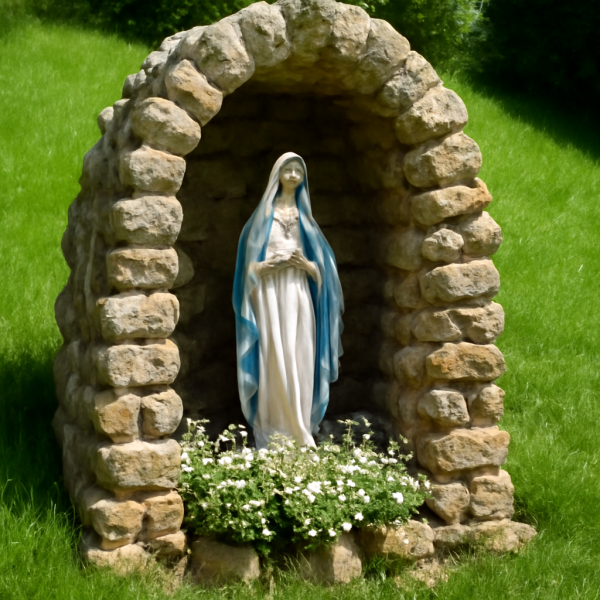
The church plans a grotto about 16 feet by 39 feet. It would hold a statue of the Virgin Mary, a small plaza, a walking path and a retaining wall. The city's zoning board granted a variance so the project could go forward. Neighbors Joel and Elizabeth Frederic sued. They raised concerns about traffic and parking if the site became a destination for pilgrims.
The Kentucky Supreme Court sided with the neighbors. It held that the zoning board exceeded its authority when it granted the variance, and the shrine plan stopped there. The church then asked the nation's highest court to step in under the Religious Land Use and Institutionalized Persons Act, a federal law that protects houses of worship from burdensome local land rules.
The church raised two questions. The justices took only one: whether barring a religious institution from building a religious structure on its own land is a "substantial burden" on religious exercise. Kentucky's attorney general and 19 other Republican attorneys general had urged the Court to hear the case.
What a small stone grotto asks of the rest of us
Notice the size of this fight. It is not a cathedral or a stadium. It is a place for people to stand quietly and pray, on property the congregation already owns. The question before the nation's highest court is whether a government may say no to that.
Our country was settled by people who crossed an ocean so they could worship without a magistrate telling them how, or where. The First Amendment says Congress shall make no law prohibiting the free exercise of religion. Zoning boards and courts are not Congress, but the principle reaches them too. When a church is told it cannot build a prayer garden on its own ground, a free people ought to ask what has been lost. The neighbors' worries about parking deserve a fair hearing. But a parking concern is not a reason to treat worship as a nuisance to be managed.
Yet the deeper matter here is not a statute. Men and women build shrines, steeples and altars because the human heart cannot rest without God. Every generation has tried to silence that longing, by law or by ridicule, and none has managed it. The Lord Jesus told His disciples where worship finally lives.
"God is a Spirit: and they that worship him must worship him in spirit and in truth." (John 4:24)
Mark that well, my friend. A stone grotto cannot save a soul, and neither can a grand church house. Truth does not depend on a building permit. The Samaritan woman argued with Jesus over which mountain was the right place to worship. He took the question away from the map and put it in the heart. Worship that pleases God is worship in truth, and truth has a name: Jesus Christ, crucified for sinners and risen from the grave.
That is why believers can defend the right to build and still hold buildings loosely. We should speak up when the law is used to push faith out of public life, and we should do it with courtesy toward those who disagree. Honor the judges. Honor the neighbors. Make the case plainly and let the courts decide. The Scripture also reminds us what the church is.
"Ye also, as lively stones, are built up a spiritual house, an holy priesthood, to offer up spiritual sacrifices, acceptable to God by Jesus Christ." (1 Peter 2:5)
A people made into living stones cannot be zoned out of existence. Governments may close a chapel, but they cannot close a prayer. In many lands today, Christians gather in homes and fields because no permit will ever come. Here, the courts still hear a congregation when it knocks. That is a gift, and it should not be taken for granted.
So watch this case. If you hold a pew in some small church, know that what is decided in Washington will reach your own town. And if you hold no pew at all, hear this: the God who is worshiped in spirit and in truth is not far from any one of you. He asks for no variance and no permit. He asks for a repentant heart, and He answers it with a Savior.