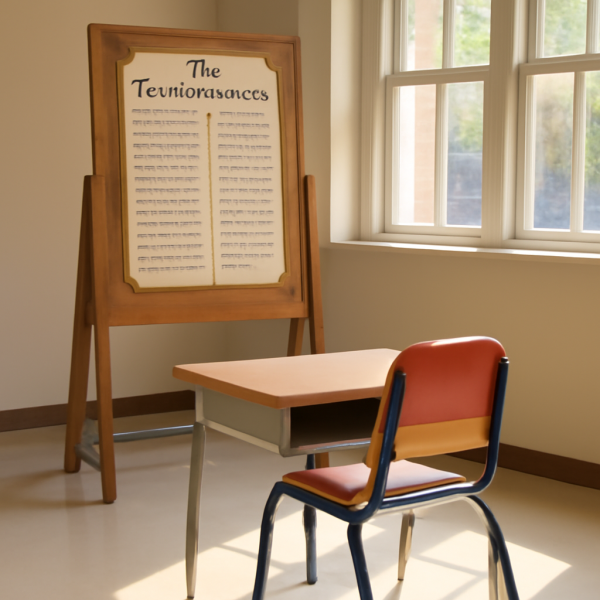
Republican Gov. Greg Abbott signed S.B. 10 into law, and it took effect in September 2025, reaching roughly 5.5 million public school students from kindergarten through twelfth grade. A federal district court initially blocked enforcement in about a dozen school districts, but the full U.S. Court of Appeals for the Fifth Circuit reversed that injunction in April on a 9-8 vote, clearing the way for the postings to go up statewide.
The petitioning families come from Christian, Jewish, Hindu, and nonreligious households. Their filing argues the law forces "impressionable, captive-audience children" to sit under a state-selected scripture "for nearly every hour of every school day, for up to thirteen years," and that it cannot be squared with Stone v. Graham, the 1980 decision striking down a nearly identical Kentucky classroom law. Texas Attorney General Ken Paxton (R-Texas), who defended the statute before the Fifth Circuit, has called the Commandments "indisputably a cornerstone of America's moral and legal heritage," arguing the founders built a nation of law and ordered liberty on those very truths.
Texas is not alone. Louisiana passed the first such law in 2024, and Arkansas and Alabama have since followed with similar classroom-display requirements of their own. Whether the Supreme Court agrees to hear the Texas case will likely decide the fate of all of them.
A law that was never meant to save anybody
Here is where a body ought to slow down and think clearly, because there is more at stake in this fight than a poster on a cinderblock wall. The Ten Commandments are good. They are righteous. God carved them in stone with His own finger and gave them to Moses on a mountain that shook with fire. No nation was ever built better than one that honored them. But hang them in every schoolroom in Texas, letter-perfect, King James wording and all, and you have still not saved one single soul. A law on a wall never changed a heart. It never will.
That is not a modern complaint. It is the whole point of the law in the first place. Paul said it plain:
"Therefore by the deeds of the law there shall no flesh be justified in his sight: for by the law is the knowledge of sin." (Romans 3:20)
You do not read "Thou shalt not covet" and walk away clean. You read it and you feel the hook go in, because you have coveted, and you know it, and the commandment did not clean you up — it named you. That is what the law is for. It is a mirror, not a bath. It shows a man the dirt on his face; it cannot wash it off.
So a Christian ought to want those Commandments honored in the public square — carved in courthouses, taught in homes, respected by lawmakers — and at the very same time know good and well that a child can read every word of them off a classroom wall for thirteen straight years and die lost. The battle in the courts matters. Culture matters. But it is not the whole fight, and it was never going to be. God did not stop at giving Moses two tables of stone. He promised something greater further on:
"I will put my law in their inward parts, and write it in their hearts; and will be their God, and they shall be my people." (Jeremiah 31:33)
That writing does not happen with a printer or a school board vote. It happens at a cross, where the Man who kept every letter of that law without a single failure took the punishment owed to those who broke it. My friend, whatever the nine justices decide about a poster in a classroom, the question that actually follows you home tonight is simpler and closer: has that law been written on a wall somewhere out yonder, or has it been written on your heart? One of those you can vote on. The other you cannot — it can only be given, and it is offered tonight to whoever will have it.