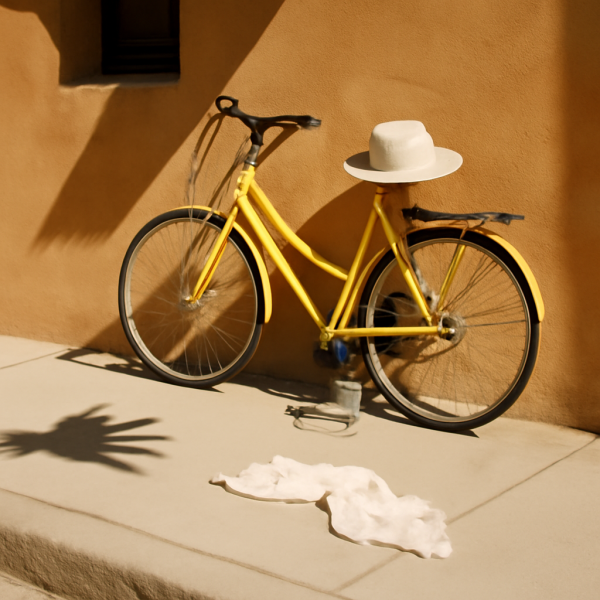
I confess the account undid me a little, because I know how easy it is to keep pedaling. We are all in motion, all bound somewhere, all persuaded that the trouble on the roadside belongs to someone better equipped, someone with more time, someone who is not us. The Lord Jesus knew this temptation well. When a lawyer pressed Him to define who counted as a neighbor, He did not offer a definition. He told a story, and in that story two respectable men crossed to the far side of the road. Only one traveler stopped: "But a certain Samaritan, as he journeyed, came where he was: and when he saw him, he had compassion on him" (Luke 10:33).
Notice the sequence, for it is the whole of the matter. He came where he was. He saw him. He had compassion. Mercy always begins with a willingness to draw near enough to see. The priest and the Levite were not wicked men; they were merely careful men, occupied men, men who had somewhere to be. But love is not careful in that way. Love slows the pace, turns the head, and lets the suffering of a stranger interrupt the plan of the day. A boy on a bicycle in the desert did what two clergymen in the parable would not: he came where she was.
I think, too, of how the world measures a life. We tally our days by accomplishment and headline, by the large and visible things. Yet heaven keeps a different ledger. Our Lord, describing the great day of judgment, said, "Verily I say unto you, Inasmuch as ye have done it unto one of the least of these my brethren, ye have done it unto me" (Matthew 25:40). A frightened woman on a hot sidewalk, unable to name her own street, was to the eyes of the world one of the least. But she was not the least to the God who numbers the hairs of our heads. And the mercy shown to her was, in some mystery I cannot fully explain, shown to Christ Himself.
There is a word here for those of us who feel small and unqualified for holy work. This young man was not ordained, not credentialed, not sent by any committee. He simply had eyes that could see and a heart that would stop. That is the whole apprenticeship of compassion. You do not need a title to bind up a wound or fetch a cup of cold water. You need only to be present, and willing, when the need appears on your path.
I do not know what road you are traveling today, or what lies broken along its edge. Perhaps it is an aging neighbor whose porch light has gone dark. Perhaps it is a coworker carrying a grief she cannot speak. Perhaps it is only a tired stranger at a checkout line. The gospel does not ask us to save the whole world before nightfall. It asks us to stop where we are, to see the one in front of us, and to have compassion.
Jesus ended His parable with a command that still burns: "Go, and do thou likewise." May God give us the grace, this very week, to be the kind who stop.