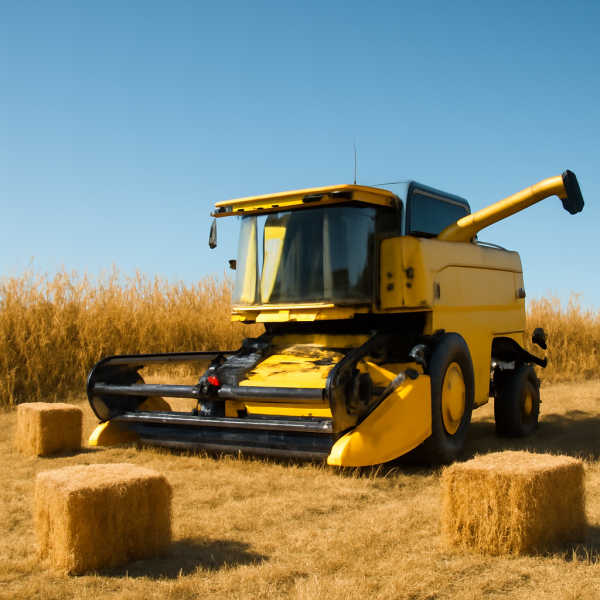
The president spoke while campaigning for Senator Roger Marshall (R-Kansas), about two weeks before the Nov. 3 midterm elections. He described the money as meant to offset diesel costs during this harvest season. The U.S. Department of Agriculture put out its own announcement the same day.
The department said commodity-specific payment rates for Title I crops, such as wheat, corn, soybeans, and cotton, will be released in November. Payment methods for other eligible crops, including specialty crops, will be announced later. Payments will rest on a national average of losses, drawn from planted acres on file with the Farm Service Agency, federal cost-of-production estimates, and government projections for yields and prices.
Farmers will not have to carry crop insurance to take part. The department advised producers to prepare by setting up a Login.gov account linked to USDA. The program is modeled on the earlier Farmer Bridge Assistance program, which drew on $12 billion in Commodity Credit Corporation funds. Agriculture analysts have noted that the money will not arrive right away, and that exact per-acre figures have not been published.
That is the news. Behind it is a plain fact that every one of us eats three times a day without thinking about it: somebody got up before light, climbed into a machine, and burned expensive fuel to bring in a crop.
The man on the combine
A farmer does not set the price of diesel. He does not set the price of fertilizer, or the price of corn at the elevator either. He plants in the spring on a promise he cannot see, and he prays over the sky. Then in October he finds out what the year was worth. When fuel climbs and grain does not, he can work harder than ever and still end the season in the red.
It is right for a government to take notice of such a man. Honoring those who feed a nation is not charity to a special interest. It is common sense, and it is older than America. A country that loses its farmers will soon learn what hunger is. Whatever one thinks of how the dollars are figured, the instinct to stand with the people who bring in the harvest is a sound one, and the President and the Department of Agriculture deserve credit for acting while the combines are still running.
Who actually gives the harvest
But, my friend, no check from Washington ever made a kernel of corn. No program grew a head of wheat. The Bible says it plainly, and it said it long before there was a Treasury to write checks:
"While the earth remaineth, seedtime and harvest, and cold and heat, and summer and winter, and day and night shall not cease." (Genesis 8:22)
God spoke that promise to Noah after the flood, and every autumn since, it has come true. The rain, the sun, the seed that dies in the ground and rises again, these are not ours. The psalmist wrote, "The earth is the LORD'S, and the fulness thereof; the world, and they that dwell therein." (Psalm 24:1) A farmer knows this better than most. He works the land, but he cannot command it.
There is a danger in a good harvest and in a good relief program alike. It is the quiet notion that we have things in hand, that the bins are full because we were clever, or that the nation is secure because the budget is large. Jesus told of a rich man whose ground brought forth plentifully, who tore down his barns to build bigger ones and said to his soul, take thine ease. God called him a fool that very night. The trouble was never the full barn. It was the empty heart that thought the barn was the whole of life.
Nothing in the field can save a soul. Not the biggest yield, not the best price, not the finest policy. Bread feeds the body for a day. The bread of heaven, Jesus Christ, who gave His life on the cross and rose again on the third day, feeds the soul forever. He said, "I am the bread of life: he that cometh to me shall never hunger." (John 6:35)
So let the farmer be honored, and let the work of those in authority on his behalf be weighed fairly. But let every man, woman, and child in the land look past the grain and the gauge and the ballot to the One who sends the seedtime and the harvest both. He has kept His word to Noah for thousands of years. He will keep it to you, if you will come to Him.