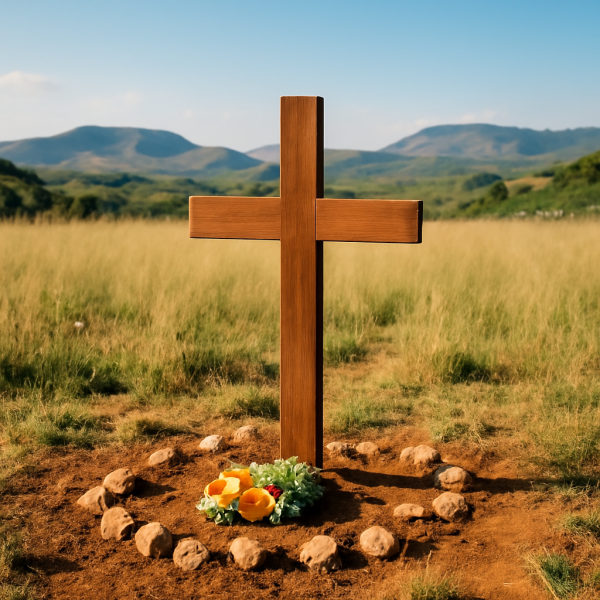
Hours later, after giving a radio interview in Mbale, Mulongo left the station by motorcycle with a friend, Robert Mukisa, headed for the place where they were lodging. About nine miles outside the city, in Jami village, several men on motorcycles blocked the road and overtook them. Mukisa fled roughly two kilometers on foot before he was able to call police and Mulongo's own pastor to report the attack. Mulongo's body was found with injuries to his head, right hand, chest, and back.
Police in Uganda have opened an investigation and named Imam Musa a suspect, though at this writing no arrests have been made and he remains at large. Mulongo is survived by his wife and two children, ages four and seven. His body was released to the family for burial in Petete village, also in Butebo District.
A man does not tell another man he deserves death for what he believes unless he understands, better than most, that belief has a cost. The imam who spoke that warning to Bernard Mulongo was not wrong about the stakes, only wrong about who holds them.
What Two Women Found Worth the Risk
Consider what happened before the threats and the motorcycles: two Muslim women stood up, in public, in a country where such a step can mark a person for the rest of her life, and said that they now believed on Jesus Christ. They did this knowing what it might cost their families, their standing, perhaps their safety. Whatever else is unresolved in this case, that much is certain — something was true enough to them that they were willing to lose everything else to have it.
That is the whole of the gospel offer laid bare. Christ never dressed up the invitation as safe or convenient. He told those who would follow Him to count the cost first, and He told them plainly what the world would do to those who bore His name. Bernard Mulongo knew this too. A man does not preach in the open, defend the resurrection before a hostile crowd, and walk home afterward without knowing the risk. He went anyway.
This is not a call to seek out danger. It is a reminder of where real fear belongs, and where it does not.
"And fear not them which kill the body, but are not able to kill the soul: but rather fear him which is able to destroy both soul and body in hell." (Matthew 10:28)
Uganda is not, by and large, a nation hostile to the church. Christians there worship openly, build churches, raise families in the faith without the daily terror believers know in harder places. What happened to Bernard Mulongo was not the policy of a government or the temper of a whole people — it was the rage of men who could not bear to watch two women walk out from under their authority and into the light. That distinction matters. It means the answer is not retreat. It means the gospel keeps going out anyway, because it has always gone out into places where somebody, somewhere, would rather kill the messenger than hear the message again.
A widow in Butebo District is raising two children tonight without their father. A friend named Robert Mukisa is alive because he ran, and will carry that for the rest of his days. And two women who found something worth more than the life they knew are still, presumably, walking in it. Their names are not in the reporting. Their courage does not need to be, to matter to the God who sees it.
The soul cannot be touched by a knife or a motorcycle blockade on a dark road. It can only be lost by unbelief, or kept by the one who bought it. That was true for Bernard Mulongo standing at a podium in Mbale, and it is true for whoever reads this now, wherever the cost of belief happens to be lower, and the excuses for withholding it come easier.