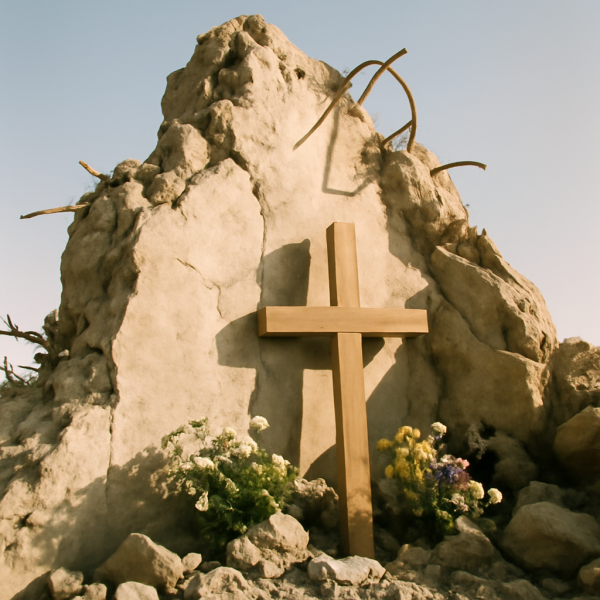
I confess that when I read of the earth itself heaving and swallowing homes, my mind went straight to the forty-sixth Psalm. There the sons of Korah sing of the one thing that does not move. "God is our refuge and strength, a very present help in trouble. Therefore will not we fear, though the earth be removed, and though the mountains be carried into the midst of the sea." I have quoted that verse at gravesides and in hospital corridors, but I do not think I have ever felt the literal force of it as I did this week. The earth was removed. The mountains, in a manner of speaking, were carried down. And the psalmist does not pretend it will not happen. He simply insists that even then, there is a refuge that no fault line can reach.
It would be a cheap and cowardly faith that used that verse to skip past the grief. The men and women digging through concrete in the summer heat are not looking for a tidy sermon; they are looking for their children. When word came that a man had been pulled alive from a collapsed building eight days after the quake, rescuers wept, and so should we. That is not sentimentality. That is the image of God flickering in the dark, the stubborn conviction that one life is worth eight days of digging. Heaven, I am certain, bent low over that rubble.
What moves me nearly as much as the disaster is the answer to it. Search teams came from the United States, from Switzerland, from the Netherlands, strangers crossing oceans to claw at the wreckage of people they had never met. Aid workers are hauling clean water to families who have been drinking from bottles for a month. None of them asked whether the trapped were worth saving. They simply went. In that going I hear the quiet echo of an old command: "Bear ye one another's burdens, and so fulfil the law of Christ." The law of Christ is not fulfilled in our opinions about suffering. It is fulfilled in our hands, in the water we carry, the rubble we lift, the money we send, the prayers we will not let grow cold when the cameras leave.
Because they will leave. That is the hard truth about a recovery measured in years. The world's attention has the attention span of a candle in the wind, and by autumn Venezuela will have slipped from the headlines while the widows and the orphaned children are only beginning to grieve. The church must be slower than the news. We are the people who keep bearing the burden after everyone else has set it down.
So I am praying this week, and I would ask you to pray with me. Pray for the ones still sifting the debris. Pray for the eighteen thousand with no roof over their heads tonight. Pray for the rescuers who go home haunted by what they could not reach in time. And when you have prayed, ask the Lord what your two hands are meant to carry. The earth was removed in Venezuela. But the refuge was not. It never is.