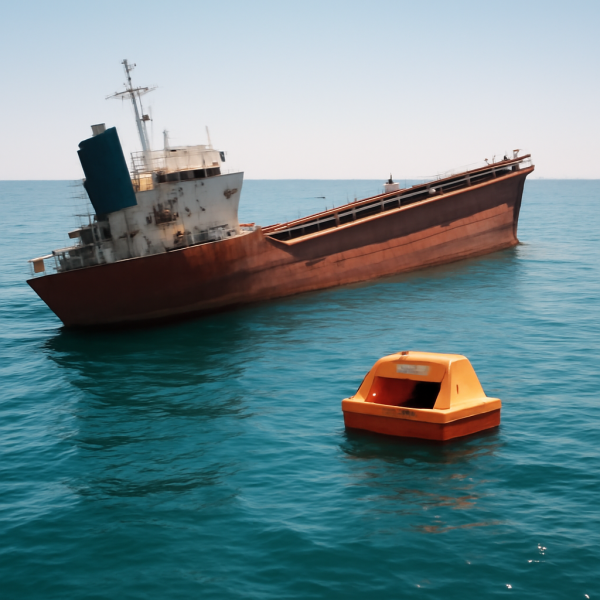
The sunken ship was a Guinea-Bissau-flagged freighter. The second vessel, flying the Maltese flag, stayed afloat, and all 15 of its crew reached safety. They were seven Ukrainians and eight Azerbaijanis. Some were hurt, but officials said none seriously.
Prime Minister Rumen Radev called the attacks "absolutely unacceptable" after an emergency meeting of Bulgaria's Security Council. He said Sofia does not yet have solid evidence to accuse any specific party. Russia's ambassador, Eleonora Mitrofanova, told Bulgarian officials she had no information from her Defense Ministry about attacks on commercial ships. She did not rule out a provocation by a third party. European Commission President Ursula von der Leyen condemned the strikes.
It is the second such sinking in about a week. Drones sank another vessel inside Bulgaria's exclusive economic zone seven days earlier, and ten sailors were lost, nine Syrians and one Egyptian. Bulgaria has asked its partners for stronger surveillance of its waters and airspace. Rescue crews were still searching the water for the 11 missing men as of Tuesday night.
The cause and the responsible party have not been established. What is plain is the toll. Twenty-one men are lost or missing in a single week, and not one of them was a soldier. They were deckhands and engineers carrying cargo for wages, men with wives and children waiting on a dock somewhere.
The sea does not care who owns it, but God does
Sailors have always known a hard truth. The water gives no promises. A man on a ship is a long way from help. Now he must also fear a machine in the sky, sent by someone he will never see, for reasons that have nothing to do with him.
That is what war does. It takes the poor man's labor and makes it a target. Ordinary people pay the price while the powerful argue over maps.
The Bible speaks of the sea with respect, and it speaks of the men who work it.
"They that go down to the sea in ships, that do business in great waters; These see the works of the LORD, and his wonders in the deep." (Psalm 107:23-24)
Notice what the psalmist says. Even in the deep, the Lord is there. He is not absent from the Black Sea tonight. He knows the name of every man still in that cold water. He knows the names of the ones already gone. No sailor sinks out of His sight.
The same psalm goes on to say what a drowning man can do.
"Then they cry unto the LORD in their trouble, and he bringeth them out of their distresses." (Psalm 107:28)
My friend, that verse is not for sailors only. Every one of us is in deep water sooner or later. A diagnosis, a funeral, a war on the evening news. When the ship goes down under you, the question is whether you know whom to call. Many of those men were praying in languages I cannot speak, and God understood every word.
The nations will keep trading accusations. Investigators will study wreckage. Leaders owe their people the truth about who fired these weapons, and honest men should demand it. Those in authority are charged with protecting the innocent, and the Scriptures hold them to that. But no inquiry will raise a drowned man, and no treaty will heal a widow's heart.
Only Christ does that. He walked on the sea, and the waves obeyed Him. He died for sinners and rose again, so that death would not have the last word over any man who trusts Him. That is the hope that holds when the water closes over. It holds for the sailor, and it holds for you.
Jesus said, "Blessed are the peacemakers: for they shall be called the children of God" (Matthew 5:9). Peace between nations will always be partial and fragile. Peace with God is complete, and it is offered today to every soul who turns from sin and believes the gospel.