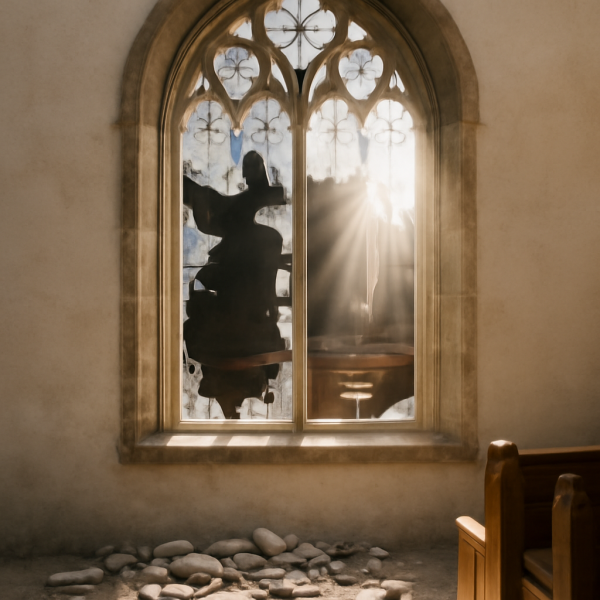
Security forces responded by arresting an undisclosed number of Muslim residents involved in the assault — and four Christian men who had been beaten in it: Issa Zakaria, Maged Zakaria, Bibawi Saad, and Amir Makram. The four were held for two days and released on July 10, but only after they withdrew the formal complaint they had filed against the men who attacked them.
The Egyptian Initiative for Personal Rights, a Cairo-based human rights organization, publicly criticized how state authorities handled the case. According to the group, officials convened what is known in Egypt as a "reconciliation session" — an informal proceeding in which Christians are pressed to drop legal action against their attackers in exchange for vague assurances that their church will be allowed to keep operating. EIPR has called on the government to formally legalize the Minya church building and to prosecute those responsible for the violence, rather than settle the matter through such sessions.
Rights monitors following the case note that Father Kamal had alerted local security officials in advance about rising harassment connected to services at the building, and that the village has seen previous friction over Coptic worship there. Egypt's 2016 church-building law, which still requires government approval for the construction or legal recognition of many church buildings, remains a point of friction between Coptic communities and local officials in villages across Upper Egypt.
When the Wronged Are Made to Pay
Now turn that report over in your hand for a moment, my friend, and look at what it actually says. Men were stoned for gathering to worship. Their own priest's car was smashed with rocks. And when the dust settled, it was not the mob that went to jail — it was the men who had been hit with the stones. They walked free only after they agreed to let the matter drop. That is not justice. That is the world's oldest transaction: the strong impose the terms, and the weak sign because they have no better offer.
You do not need a passport to Minya to recognize that arrangement. Every generation of believers has faced some version of it — the demand to keep quiet, to smooth it over, to call the wound a misunderstanding so the powerful can move on undisturbed. The Lord Jesus never told His people this would be rare. He told them plainly it would come, and He told them just as plainly what to do with it.
"Blessed are they which are persecuted for righteousness' sake: for theirs is the kingdom of heaven." (Matthew 5:10)
Mark that word "blessed." Not cursed, not forsaken, not forgotten by heaven while the earthly ledger gets falsified against them. Blessed. The men who dropped their complaint in Minya lost their case in an Egyptian courtroom, but they have not lost their standing before God. There is a Judge who does not hold reconciliation sessions with the devil, who does not ask the injured to swallow the injury quietly so the guilty can go on their way undisturbed.
Paul told young Timothy plainly that this world does not reward godliness with ease:
"Yea, and all that will live godly in Christ Jesus shall suffer persecution." (2 Timothy 3:12)
That verse was not written to frighten you. It was written to steady you, so that when the stones start flying — literal ones in a Minya village, or the quieter kind that fall on a believer anywhere else who simply will not bend — you are not shaken loose from the truth. The world can arrest the wrong man. It can bully the injured into silence. It cannot touch the account that is being kept in heaven, and it cannot cancel the verdict that is coming.
So take courage from four names you had never heard before today — Issa, Maged, Bibawi, Amir — ordinary men who paid a price for standing where their fathers stood, in a church their community has worshiped in for years. Their government made them sign away their complaint. It could not make them sign away their faith. And that is the account that will still be open long after every earthly ledger has closed.