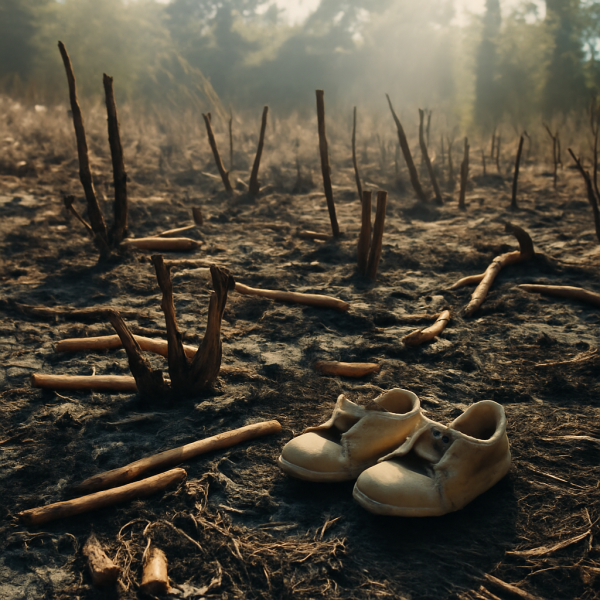
The first attack came Friday evening, when gunmen shot and killed two farmers, Gabriel Igwu and Inalegwu Adakole, as they worked a cassava field in Akpachi village, in the Ugboju area of Otukpo Local Government, Benue State. The next night, Saturday, July 11, armed men struck the Kum and Wereng-Comp communities in Ryom County, Plateau State, near a Nigerian army checkpoint; witnesses said the soldiers stationed there did not respond even as attackers gathered in large numbers. Before dawn on Sunday, between roughly 3:30 and 4:30 a.m., gunmen invaded the Otukpo-Nobi community in Benue State, opening fire on sleeping households and setting homes on fire. At least sixteen people died in that raid, and several more were wounded.
Maxwell Ogiri, chairman of Otukpo Local Government, confirmed both Benue attacks and said preliminary findings pointed to reprisal violence following the killing of a local Fulani herders' association chairman in the area days earlier. Community leaders and residents, however, blame armed Fulani militants for targeting Christian farming settlements, a pattern that has recurred for years across Nigeria's Middle Belt. The killings set off protests in Otukpo on Sunday, as crowds carried victims' bodies to the palace of the Och'Idoma, the traditional ruler of the Idoma people, demanding government action. No arrests had been announced as of this writing.
Benue State is home to roughly six to seven million people, more than 97 percent of them Christian. Intersociety, a Nigerian human rights and advocacy group, has documented more than 7,000 Christians killed nationwide in the first 220 days of this year, part of a death toll that has climbed past 52,000 since 2009.
A two-month-old does not know the word genocide, and a mother running from a burning house at four in the morning is not thinking about statistics. She is thinking about her children, and she is calling on the name of the Lord, because there is nowhere else left to call.
A Refuge Older Than Any Checkpoint
Governments have their place. Scripture says so plainly — the sword is not given to rulers for nothing, and a nation owes its people order and protection. When soldiers stand within earshot of a massacre and do not move, that is a failure worth naming, and worth demanding answers for. But the believers of Benue and Plateau are not waiting on a checkpoint tonight. They are calling on something older and surer than any army post.
"God is our refuge and strength, a very present help in trouble." (Psalm 46:1)
Present help. Not help that arrives after the report is filed and the bodies are counted. Help that is already there in the smoke and the dark, before the sun comes up over what is left of the village. That is the promise these farmers and their families are standing on, and it has not failed a single generation of the persecuted church that has ever leaned on it.
My friend, the world will tell you that faith is what people cling to when they have run out of options. It is closer to the truth to say faith is the one thing that cannot be burned, shot, or driven off a farm. A house can be set ablaze. A field can be seized. A man's life can be taken from him in the dark by someone he never sees coming. But the soul that has been bought by the blood of Christ belongs to God, and no militia, no government, no grave has the authority to take that back.
The psalmist did not write those words from safety. He wrote them knowing the earth could be removed, the mountains could be carried into the sea, and the waters could roar. He wrote them in the middle of trouble, not after it passed. That is the only kind of comfort worth having — one strong enough to stand in a burning village at four in the morning, not merely one that sounds nice in a quiet sanctuary on a Sunday.
Christians in Nigeria's Middle Belt are burying farmers and infants this week because they would not leave the land God gave their fathers, and because they would not stop being Christian to make themselves safer. That is a costly kind of faithfulness. It is also, according to the Lord who counts every sparrow that falls, never faithfulness that goes unseen.
"The LORD is nigh unto them that are of a broken heart; and saveth such as be of a contrite spirit." (Psalm 34:18)
He is nigh. Not far off, not indifferent, not slow. Nigh — near enough to hear the cry before it finishes leaving the lips of a mother who has lost everything but her children and her God. That nearness is not reserved for Benue or Plateau alone. It is offered to every soul, in every nation, who will call on the name of the Lord and mean it.