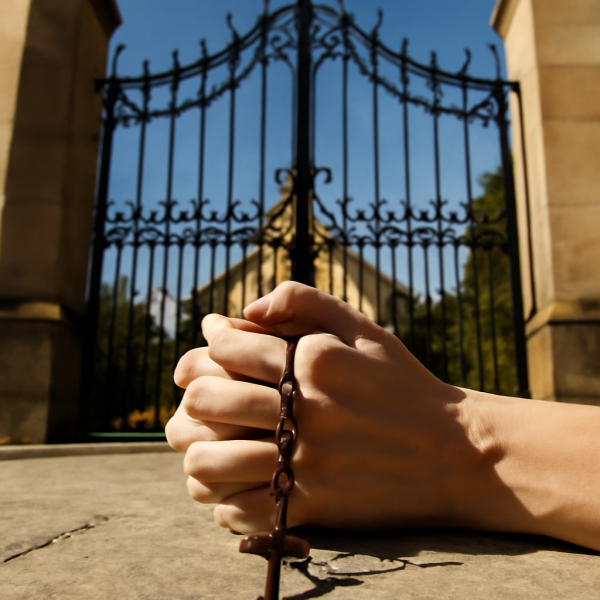
Sister Ugboaja, a native of Nigeria, belongs to the Daughters of Mary Mother of Mercy and has lived in the Rio Grande Valley for years. She works as a registered nurse at South Texas Health System and spent a decade before that as a certified nursing assistant in nearby Edinburg. At Our Lady of Sorrows she also serves as a volunteer minister.
Parish leaders posted news of the arrest online within hours, and it spread fast along the border. Republican Rep. Monica De La Cruz and Democratic Rep. Henry Cuellar, whose districts meet near McAllen, both intervened, and ICE released Sister Ugboaja the same day. Bishop Daniel Flores of the Diocese of Brownsville said afterward that enforcement protocols allowing "a religious sister, or anyone, to be detained and handcuffed while peacefully walking to Church on a Sunday morning are wildly disturbing and need to be reformed."
ICE has not given a detailed public account of why agents stopped her specifically, and questions about the basis for the detention remain open. What is not in question is the picture: a woman in her sixth decade of life, headed to pray, stopped short of the church door and put in handcuffs.
What the Law Is For
Set the badge and the border aside for a moment, and a harder question stands underneath this whole episode: what does a nation owe the law, and what does the law owe a soul? Scripture does not treat that as a trick question. Paul told the Roman church plainly that governing authority is not accidental — "the powers that be are ordained of God" (Romans 13:1) — and a believer, even one detained in error, is not thereby freed to despise order. Borders, courts, and officers serve a real purpose, and no Christian needs to pretend otherwise.
But law is never self-executing. It travels through human hands before it reaches a human being, and those hands are judged by more than whether the paperwork was in order. The prophet Micah did not tell Israel to tear down its courts. He told them what those courts were for.
"He hath shewed thee, O man, what is good; and what doth the LORD require of thee, but to do justly, and to love mercy, and to walk humbly with thy God?" (Micah 6:8)
Justice and mercy are not opponents in that verse. They are harnessed together, pulling the same load. A system that can do the first while forgetting the second has not become more lawful — it has become less faithful to what law was ever meant to accomplish. Whatever the final word on why agents stopped Sister Ugboaja that morning, taking the beads out of a woman's hand on her way to prayer was not required by any statute. It was a choice, made by someone with room to choose otherwise.
The gospel has always had a particular tenderness toward the foreigner in the land, the nurse who has spent a decade at another people's bedsides, the sister who crosses a sidewalk to kneel in a pew that isn't in her home country. The writer of Hebrews did not treat that tenderness as sentiment. He called it a form of caution: "Be not forgetful to entertain strangers: for thereby some have entertained angels unawares" (Hebrews 13:2). A nation can enforce its borders and still remember whom, exactly, it is touching when it does.
That two lawmakers from opposing parties picked up the phone the same day says something worth noticing: this is not, at bottom, a partisan complaint. It is a plea that the machinery of the state be operated by people who still recognize a nun on her way to Mass as a soul made in God's image before she is a case file. My friend, that recognition is not owed only to nuns. It is owed to every stranger a system is built to process, because the God who ordained the authorities also ordained mercy, and He never meant for a believing people to have to choose between them.