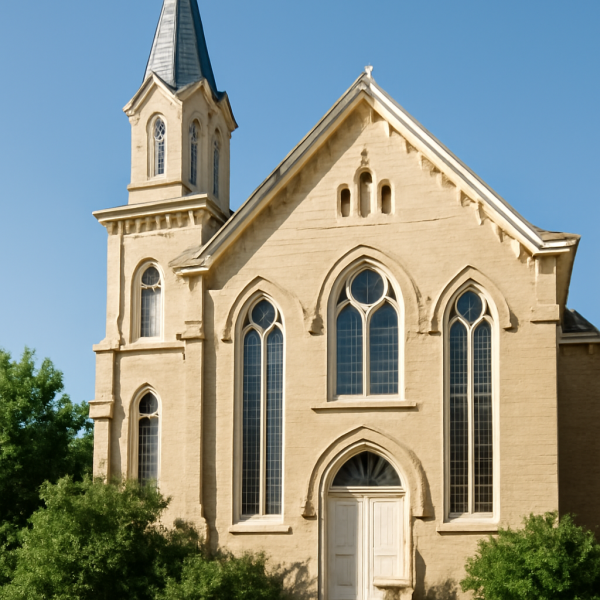
The church was founded in 1876 by American Presbyterian missionaries on land granted by the Qajar monarch Naser al-Din Shah. For nearly a century and a half it has served Tehran's Armenian and Assyrian Christian community. Church leaders say armed intelligence agents threatened them with imprisonment and ordered roughly twenty low-income Christian families living on the compound to vacate within two weeks. The property includes the sanctuary itself, two schools, and dozens of residential units spread across several acres in the heart of the capital.
The seizure rests on a 1998 ruling from Iran's Revolutionary Court, which ordered the compound transferred to the Execution of Imam Khomeini's Order, a state foundation controlled by the Islamic Revolutionary Guard Corps that has absorbed vast amounts of confiscated property since the 1979 revolution. Religious freedom monitors note the timing was left dormant for nearly three decades before regime agents moved to enforce it this summer.
St. Peter's is not an isolated case. Presbyterian churches in Tabriz and Mashhad have already been shuttered, along with an Assemblies of God congregation in Gorgan. Advocacy groups tracking religious freedom in Iran describe a deliberate pattern: strip independent Protestant institutions of their property, forbid worship services conducted in Persian, and push what remains of Christian life behind walls the state can watch and control.
A People Whose Address Was Never the Point
Now here is a thing worth sitting with, my friend. The men who run Tehran can produce a court order. They can send six agents with badges and a deadline. They can take a deed signed by a king a hundred and fifty years dead and use it to put a Christian family's furniture out on the sidewalk. What they cannot do, what no government on this earth has ever managed to do, is repossess the church itself. A building can be seized. The people who gather inside it cannot be, not really — not the part of them that matters.
That has always been the quiet scandal of the gospel to men who love power. They imagine that if they can take the land, the sanctuary, the schoolhouse, they have taken the thing. But the church was never the plaster and the roof beams. It was never the address on Si-e-Tir Street. Paul wrote his letters from prison cells, not from a chancery, and the gospel he carried needed no zoning permit to be true.
"For here have we no continuing city, but we seek one to come." (Hebrews 13:14)
Every family being told this week to pack their belongings and leave a building their grandparents may have been baptized in is learning something the rest of us are spared from learning so sharply: that no house built by hands, however old, however sacred with memory, was ever meant to be the final home. Scripture never promised the saints a permanent deed. It promised them a city whose builder and maker is God, and no revolutionary court on earth has jurisdiction over that one.
This is not offered as comfort cheaply bought. Losing a church is a real grief, and eviction by armed men is a real wrong, one that deserves to be named plainly for what it is. But grief and hope are not strangers to one another in the life of a believer. The apostle who wrote of being persecuted also wrote that the persecuted are not forsaken.
"Persecuted, but not forsaken; cast down, but not destroyed." (2 Corinthians 4:9)
The families of St. Peter's Church will find another room to gather in, a rented hall, a living room, a courtyard swept clean. It will not have the stained windows or the century of prayers soaked into the walls. But the gospel that first came to that ground in 1876 did not arrive because of the building. It arrived because someone believed a word, and that word travels lighter than any deed of property ever could.