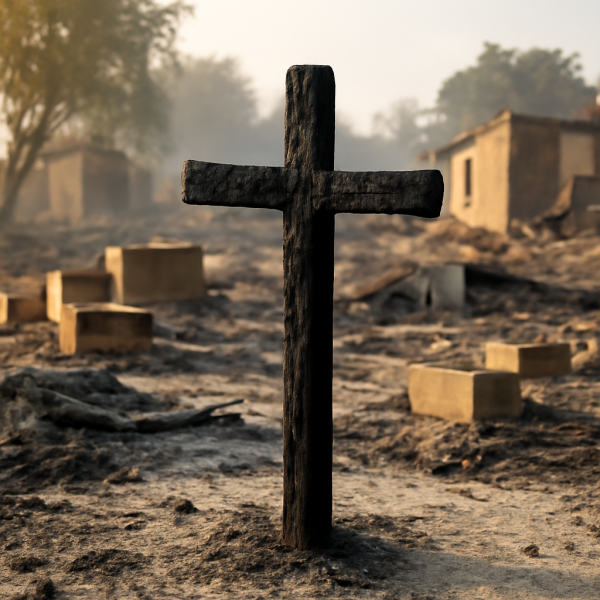
Witnesses said the attackers set homes and shops ablaze and hunted down villagers who fled into the surrounding bush. Ishaya Dawa, a local youth leader, said most of the dead were women, children, and the elderly — those least able to run. A former councilor for the area, Jacob Nera, told reporters the Nigerian Army did not arrive in time, though he stopped short of alleging deliberate neglect.
President Bola Tinubu called the killings "a barbaric and cowardly act of terror against defenceless people" and ordered the armed forces, police, and intelligence services to intensify the manhunt. That order bore fruit on August 3, when troops of Sector 3, Operation Enduring Peace, arrested a 48-year-old suspect, Salihu Miakailu, during an intelligence-led raid on his residence in Dutsen Kura village, Bassa Local Government Area, in neighboring Plateau State. He is being investigated for his alleged role in the attack; no charges have yet been filed, and his guilt remains for Nigerian courts to determine.
Naridon is one entry in a grim ledger. Nigeria accounts for roughly seventy percent of all Christians killed for their faith worldwide this year, and Kaduna and Plateau states have absorbed attack after attack from armed militias that Nigerian authorities have struggled to hold back. The pattern repeats: night falls, gunmen come, a village buries its dead, and the world moves on before the ashes cool.
What Do You Say to a Burned Village?
There is no clever transition from thirty caskets to a sermon. A man does not walk past that kind of grief and reach for eloquence. He can only stand at the edge of it, take off his hat, and tell the truth as plainly as he knows how.
The truth is this: evil is real, and it does not knock before it enters. It came to Naridon in the dead of night with rifles and torches, the same way it has come to villages in Nigeria for years now, the same way it came to a garden in Eden when a serpent whispered a lie. Scripture never pretends the world is safe. It tells us plainly that the wicked lie in wait, that the enemy of souls is a murderer from the beginning. What happened in Kaduna is not a mystery to the Bible. It is the oldest story there is — Cain's hand raised against Abel, hatred spilling the blood of the innocent.
But the Bible does not stop at the grave, and neither should we. The children who died in Naridon, the mothers, the fathers who could not outrun the fire — their names are not lost to God. Not one of them. The Lord who numbers the hairs on a head has not lost count of the souls in that village.
"Precious in the sight of the LORD is the death of his saints." (Psalm 116:15)
Precious. Not forgotten, not wasted, not swallowed up in the dark. When the world counts thirty bodies and moves to the next headline, heaven counts thirty souls who belonged to somebody, and to Someone greater still.
My friend, if you have ever wondered whether the world is truly this dangerous, this soaked in cruelty, you have your answer in Kaduna State this week. And if you have ever wondered whether faith is worth holding onto in a world like that, you have your answer too — because the Christians of Naridon did not gather that Sunday to court death. They gathered to worship a Savior who has already walked through death and come out the other side. Jesus Christ was not a stranger to unjust killing. He was nailed to a Roman cross by men who thought violence would have the last word. It did not.
He rose. And because He rose, the fire that took Naridon's homes did not take what matters most. The believers who died there died in Christ, and to die in Christ is not annihilation — it is arrival.
Pray for the survivors who buried their neighbors this week. Pray for the investigators seeking justice for the innocent. And reckon honestly with your own soul, because the same gospel that comforts the grieving in Nigeria is the only thing that will steady you on the day trouble finds your own door. It always does, sooner or later. The question the Lord puts to every one of us, in Kaduna or anywhere else, is simple: when the fire comes, whose hand are you holding?