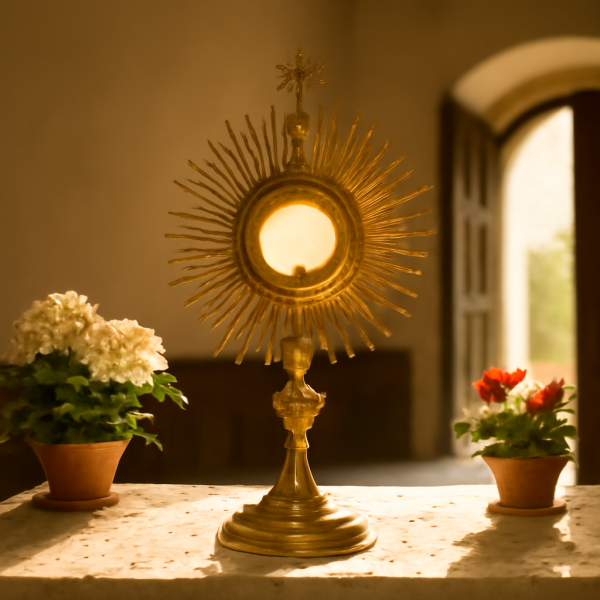
Archbishop Nelson J. Pérez of Philadelphia served as principal celebrant and homilist. In his remarks he told the crowd, "It transforms us. It conquers us," describing what he called the enduring presence of Christ in the sacrament of the altar, and said of the pilgrims, "we're all walking to one place." Following the liturgy, worshipers walked roughly two miles in sweltering July heat behind Archbishop Pérez, who carried a monstrance under a canopy, to the National Shrine of St. John Neumann.
Marchers came from dioceses as far away as California and Michigan to join the Philadelphia conclusion, which organizers timed to coincide with the nation's Fourth of July semiquincentennial weekend. Pope Leo XIV, the first American-born pope, sent a letter dated June 25 and released around the anniversary, offering "heartfelt congratulations to all Americans" and voicing hope that "the Spirit of 1776" would continue to inspire the country. In it he reflected on the nation's tradition of religious freedom and urged continued welcome and protection of immigrants.
Two hundred fifty years is a long pilgrimage in its own right, and a nation given so much time to think ought to know by now what it is hungry for. A young country was born on the conviction that certain rights come from a Creator and cannot be handed out or taken back by any government. That conviction still walks American streets, sometimes in a procession, sometimes only in the quiet insistence of a mother who will not give up her unborn child, or a believer who will not bow to a court order that asks him to deny his Lord. The hunger under all of it is the same hunger, whether it shows itself in a two-mile march through Philadelphia or in the ache a man feels at two in the morning when nothing he owns has satisfied him.
What the Walking Points To
Every procession, every candle, every mile walked under a hot July sun is a confession before it is anything else — a confession that man was not built to feed himself on his own strength. That confession is older than the republic and truer than any monument raised to it. The prophet said long before Philadelphia had a name that men labor for that which satisfieth not, spending money for what is not bread. The hunger is real. The question a nation at 250 years, or a man at any age, must finally answer is where the bread is found.
"And Jesus said unto them, I am the bread of life: he that cometh to me shall never hunger; and he that believeth on me shall never thirst." (John 6:35)
Not a building. Not a parade, however reverent. Not a founding document, however wisely written. Christ himself, given for sinners on a cross and risen the third day, is the bread that ends the hunger for good. A man can walk every mile of every pilgrimage this country has road enough for and still go home hungry if he has never once come to Jesus by simple faith and let Him be his portion.
That is the good news this nation needs on its 250th birthday as much as it needed it on its first. Liberty did not begin in a hall in Philadelphia; it began at an empty tomb, and it is offered still to whoever will believe.
"Blessed are they which do hunger and thirst after righteousness: for they shall be filled." (Matthew 5:6)
My friend, whatever procession you have walked in, whatever cause has stirred you this Independence season, come now to the one table that never runs empty. He is still calling. He is still able. And He will still fill the hungry with good things this very day, if you will only come.