A local resident who asked not to be named said the community had received a warning days earlier through social media that an attack was coming. "We got a security alert on social media that Fulani are attacking us on Sunday," the resident said. The warning arrived almost to the hour it was needed, but the villagers had little with which to defend themselves against armed men moving through the dark.
The raid unfolded within sight of a Nigerian Army checkpoint. The National Publicity Secretary of the Berom Youth Moulders Association said soldiers stationed nearby did not intervene even though Fulani fighters had been seen gathering in large numbers before the attack began. Plateau and neighboring Benue State have absorbed years of similar raids on predominantly Christian farming communities, violence that has driven thousands from their land and left whole villages emptied of the families who once worked it.
The Kum and Wereng-Comp killings came only weeks after another deadly raid struck the same region. Civil society groups in the area say the pattern is now familiar: a warning circulates, the warning is not acted upon, and a village buries its dead. No arrests have been announced in connection with the July 11 attack.
A Cry Older Than the Headlines
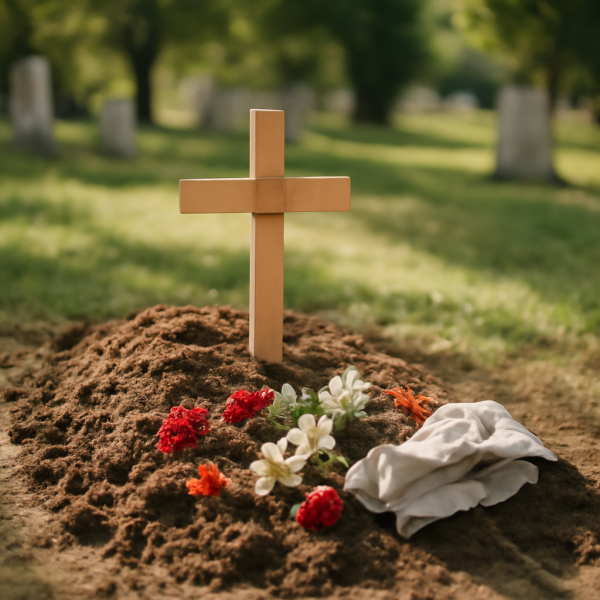
Set the numbers down for a moment. Twenty-five is a statistic. A two-month-old wrapped in a burial cloth is not. Somewhere in Ryom County tonight a mother is counting a child's life in weeks instead of years, and no committee resolution and no press release will hand that child back to her. That is the plain, terrible arithmetic underneath every dispatch out of the Middle Belt, and it deserves to be looked at squarely before anybody moves on to comfort.
The Scriptures do not tell suffering people to pretend the wound isn't there. They tell them where to take it. Under the altar in the book of Revelation, John saw the souls of those killed for their testimony, and they were not silent about it. They asked God plainly how long He would wait to set the record straight. That is not weak faith, my friend. That is honest faith, the kind that brings its grief to the only Judge who can actually do something about it.
"Who shall separate us from the love of Christ? shall tribulation, or distress, or persecution, or famine, or nakedness, or peril, or sword?" (Romans 8:35)
Paul wrote that from inside real chains, to churches that buried real martyrs, and the answer he gives a few lines later is simply "nothing." Not machetes at midnight, not a checkpoint that failed to move, not a government that hasn't yet made good on its promises to protect the vulnerable. The love of God in Christ reaches all the way into Ryom County and holds what the world tore apart. That is not a slogan. It is the only ground steady enough to stand on when the ground itself has been soaked in blood.
There is a refuge older than any government checkpoint and stronger than any militia.
"God is our refuge and strength, a very present help in trouble." (Psalm 46:1)
Here in America it is tempting to read a story like this one and feel only pity from a safe distance, then close the tab. Resist that. The church is one body, and when a family in Plateau State is cut down for bearing the name of Christ, something in every believer everywhere ought to ache. Let it move you to give the persecuted church your attention, your voice, and your prayer, and let it move you to hold your own comfortable faith up against theirs and ask whether it would survive a night like the one Kum and Wereng-Comp just endured. The gospel that held those Nigerian believers is the same gospel offered to you this morning — not a promise that the raid never comes, but a promise that the raid does not have the last word.