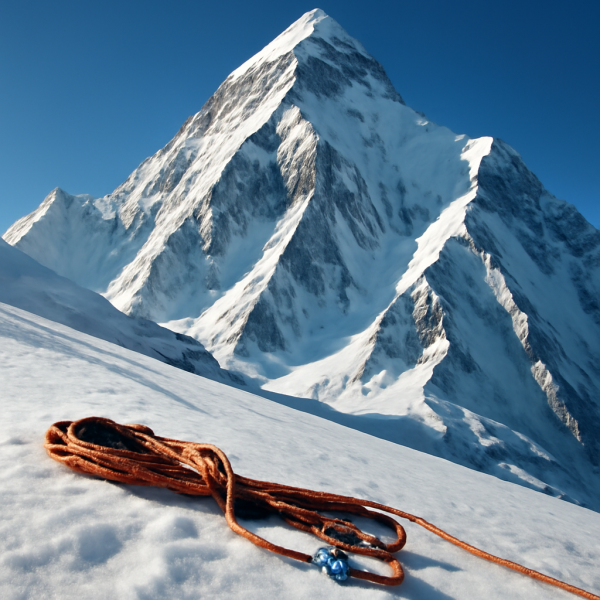
I have been sitting with that image for days now: the strongest, the most experienced, the best-equipped, taken not by weakness or error but simply because the mountain moved. There is no comfortable lesson in it, and I will not pretend to offer one. But there is a true lesson, and Scripture does not flinch from it. "Whereas ye know not what shall be on the morrow. For what is your life? It is even a vapour, that appeareth for a little time, and then vanisheth away." James wrote that to ordinary believers making ordinary plans — we will go into such a city, buy and sell, get gain. He was not scolding ambition. He was telling the truth about the ground we all stand on, whether it is a sidewalk or a snowfield at eight thousand meters.
I confess I have always felt a certain kinship with people who climb. Not because I have ever done it — I have not — but because I recognize the hunger. There is something in the human soul that looks up at what is vast and terrible and beautiful and says, I must go and see. I do not believe that hunger is vanity, or not only vanity. I believe it is a homing instinct, planted in us by the One who made both the mountain and the climber. The psalmist felt it too: "I will lift up mine eyes unto the hills, from whence cometh my help. My help cometh from the LORD, which made heaven and earth." Notice the movement of that psalm. The eyes go up to the hills — and then past them. The hills are not the help. The hills, for all their majesty, are creatures like us. The help is the Maker of the hills.
And here is the word I keep returning to this week, from the ninety-fifth Psalm: "In his hand are the deep places of the earth: the strength of the hills is his also." The strength of the hills is his. The very power that makes a mountain glorious — the mass, the ice, the terrible indifference of the slope — belongs to God. It was never ours. The climbers knew this better than most of us; anyone who has stood beneath a serac knows it in the body. The rest of us learn it more slowly, in hospital corridors and phone calls that come at strange hours. Every one of us is climbing something we do not control.
So what do we do with a week like this? We grieve, first. Ten families on three continents are living the worst days of their lives, and the church's first calling is not commentary but tears — to weep with them that weep. Then we pray for those families by name where we know the names, and by God's knowledge where we do not, for he knows every one. And then, soberly, we let the vapour teach us. Not to shrink from the mountains, but to hold our morrows with open hands. To say our loves out loud today. To settle our accounts with God today, while it is called today. The men and women on Broad Peak woke Thursday morning with plans. So did I. So did you. The difference between us is not virtue; it is mercy, and mercy has a purpose — it is time given to turn toward the Lord who holds the deep places and the high places alike.
The hills did not fail those climbers. The hills did what hills do, and their strength was never in the hills at all. May the God whose hand holds the mountains hold the ones who mourn — and may he teach all of us, who are still on the slope, where our help truly comes from.