On the morning of July 22, in the South Wollo zone of the Amhara Region, a drone struck the Abbay Giyorgis St. Arsema Unity Monastery. Reports say the strike came mid-morning, in the area where women had gathered to prepare food for a religious commemoration. Two people were killed. Others among the monastic community were wounded; the counts vary between accounts, as they often do in remote places where the roads are long and the hospitals are far. On July 28, the World Council of Churches publicly condemned the strike. Its general secretary, the Rev. Prof. Dr. Jerry Pillay, said that "the reported attack on a place of worship and the killing and wounding of civilians is deeply disturbing and utterly unacceptable," and called for an immediate, credible, transparent, and impartial investigation, and for those responsible to be held accountable.
I want to be careful here. Responsibility for that strike is contested, and an impartial investigation is exactly what has been asked for and has not yet been completed. I am a pastor, not a tribunal. I do not know who released that weapon, and I will not pretend to. What I do know is what was happening on the ground when it arrived, and that is the part I cannot put down.
They were making a meal. Somebody was tending a fire. Somebody was washing grain, or turning bread, or carrying water up from wherever the water is carried from in that country of high stone and long shadow. It was the kind of work nobody writes down. There is no record of it anywhere except in the muscles of the women who did it, year after year, so that on the feast day everyone would be fed. That is what was interrupted.
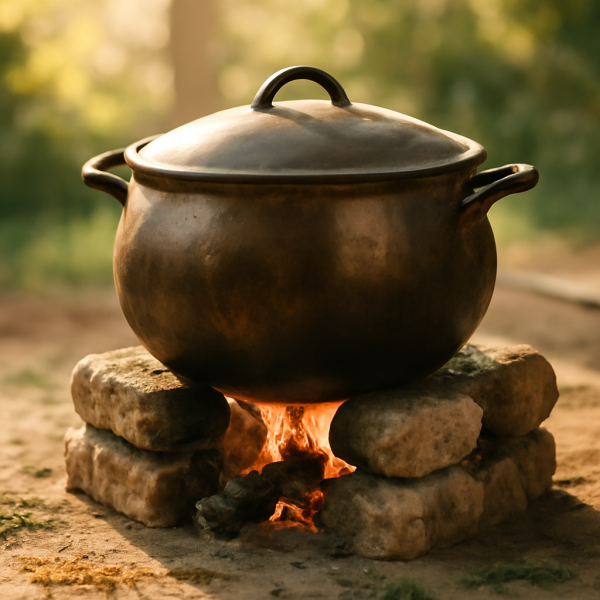
We have a strange habit in the church of ranking service. We imagine there is the holy work — the praying, the preaching, the singing — and then the ordinary work that makes the holy work possible. But God has never once made that division. Every altar in Scripture has a kitchen somewhere behind it. Every feast has hands that are tired. When the sky came down on that monastery, it came down on worship, and the worship happened to be shaped like a cooking pot.
The Psalmist writes a line that I have read at more gravesides than I can count, and I have never once found it thin: "Precious in the sight of the LORD is the death of his saints." Precious. Not permitted. Not overlooked. Not filed. Held. Weighed. Counted at full worth by the only One whose accounting is finally accurate. There are deaths in this world that no newspaper will ever carry, no government will ever number, and no investigation will ever reach the bottom of. Heaven has them all. Two women in the Amhara hills, killed while making bread for a holy day, did not slip past God on a busy morning.
And there is a second line I keep turning over. Writing of the faithful who were driven out and hunted down, the letter to the Hebrews says: "Of whom the world was not worthy: they wandered in deserts, and in mountains, and in dens and caves of the earth." That verse was written about people the world had judged expendable, and it renders the verdict the other way around. The world was not worthy of them. Monasteries in that region are old — older than most of what we call old — and they sit in gorges and on cliffsides precisely because generations of believers went out to the hard places to pray. The world was not worthy of them either. It still isn't.
So what do we do, sitting comfortably at this distance? Less than we wish, and more than nothing. We refuse to let distance turn people into a statistic. We pray for the wounded by name where we know the names and by description where we do not. We pray for the investigation to be honest, which is a real prayer with real weight, because honesty in the aftermath of violence is one of the rarest mercies on earth. And we pray for a church in Ethiopia that has buried too many and keeps opening its doors anyway.
Then, on Sunday, we take bread. We take it from hands that prepared it in a kitchen we mostly never see, and we remember a body broken and blood poured out, and we discover that we are not as far from that hillside as our maps suggest. The same table. The same Lord. The same precious, unforgotten dead, waiting for a morning that no weapon can reach.